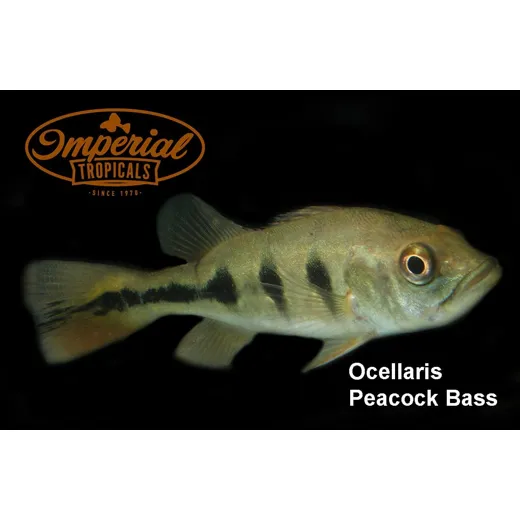
Butterfly Peacock Bass
Scientific Name: Cichla ocellaris
Common Name: Butterfly Peacock Bass
Max Size: 30″
pH: 6.0-8.0
Hardness: Moderate
Temperature: 70-82°
Aggressiveness: Semi-Aggressive
Region of Origin: South America
Captive Bred or Wild: Captive Bred
Diet: Omnivorous, primarily feeds on fish and invertebrates
Compatibility: Compatible with large South American cichlids, large catfish, and large plecos
| Key Features | Details |
|---|---|
| Max Size | 30 inches |
| Water Parameters | pH: 6.0–8.0, Hardness: Moderate, Temperature: 70–82°F |
| Aggressiveness | Semi-aggressive |
| Origin | South America |
| Bred Type | Captive bred |
FAQ
What is the minimum tank size recommended for a Butterfly Peacock Bass?
A tank of at least 200 gallons is required for mature Butterfly Peacock Bass.
Is the Butterfly Peacock Bass suitable for beginner aquarists?
No, this species is semi-aggressive and requires a large, well-maintained tank with compatible tank mates.
What kind of diet does the Butterfly Peacock Bass require?
It is omnivorous and primarily feeds on fish and invertebrates. A varied diet including live, frozen, and prepared foods is recommended.
Christian Thomson –
The Butterfly Peacock Bass is a striking addition to a large aquarium. It grows quickly and shows active behavior. I’ve kept it in a 250-gallon tank with large catfish and it’s compatible. Feeding is straightforward with a mix of frozen and live foods. Needs a stable environment, but worth the effort.
Charles Buckland –
This fish is impressive in size and coloration. I was cautious about compatibility, and it works well with large plecos. The water parameters are stable within the recommended range. Requires regular monitoring of pH and temperature.
Tim Davies –
Captive bred and healthy from the start. The fish is active and shows natural behaviors. I’ve maintained a 300-gallon tank with proper filtration and lighting. It’s not for small tanks, but in a large setup, it’s a highlight.