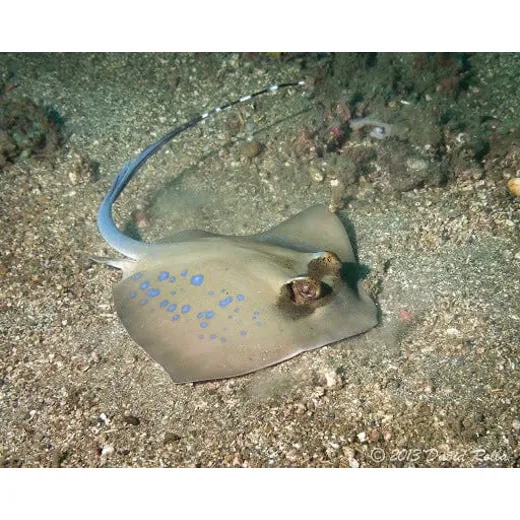
Blue Spot Diamond Stingray
The Blue Spot Diamond Stingray (Neotrygon kuhlii) features a distinctive diamond-shaped body adorned with vivid blue spots. This bottom-dwelling species thrives in spacious aquariums with soft, sandy substrates that allow it to partially bury itself for comfort and security. Its diet consists mainly of small invertebrates and sinking pellets, supporting its health and vibrant appearance. Best suited for experienced aquarists, the Blue Spot Diamond Stingray brings a unique and exotic element to marine aquarium environments.
Key Features
| Feature | Detail |
|---|---|
| Species | Neotrygon kuhlii |
| Body Shape | Diamond-shaped |
| Color Pattern | Vivid blue spots |
| Habitat | Bottom-dwelling, soft sandy substrate |
| Diet | Small invertebrates, sinking pellets |
| Experience Level | Experienced aquarists |
FAQ
What kind of substrate does the Blue Spot Diamond Stingray prefer?
The Blue Spot Diamond Stingray prefers soft, sandy substrates that allow it to partially bury itself for comfort and security.
What should I feed my Blue Spot Diamond Stingray?
It primarily eats small invertebrates and sinking pellets to maintain its health and vibrant appearance.
Is the Blue Spot Diamond Stingray suitable for beginners?
No, this species is best suited for experienced aquarists due to its specific habitat and care requirements.

Alexandra Walsh –
The stingray is a striking addition to my marine tank. It spends most of its time buried in the sand, which is both calming and natural. I feed it small crustaceans and sinking pellets regularly. It’s active during the day and seems healthy after a few weeks. Only recommend for experienced hobbyists with a large, well-maintained tank.
Rebecca Davidson –
I was initially worried about the size and behavior, but the stingray is quite calm. It enjoys the sandy bottom and hides when startled. Feeding it small prey and sinking food works well. The blue spots are very noticeable and add a unique touch to the tank.
Audrey Greene –
The stingray is beautiful and fits well in a 120-gallon tank. It does require a lot of space and a fine sand substrate. I had to adjust my feeding schedule to match its activity. Overall, it’s a good choice if you’re committed to a stable, mature marine setup.