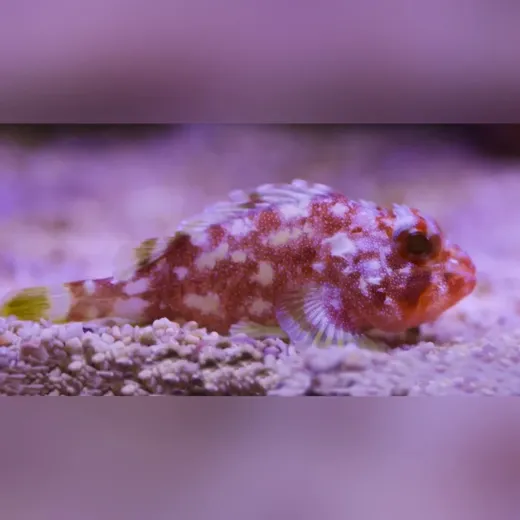
Yellow Spotted Scorpionfish (Stonefish): The World’s Most Venomous Fish
The Yellow Spotted Scorpionfish is a common name sometimes used in the aquarium trade for a species belonging to the genus Stonefish (Synanceia), most frequently the Reef Stonefish (Synanceia verrucosa). The name “yellow spotted” refers to the occasional patches of yellow, red, or orange that contribute to its uncanny, rock-like camouflage. The Stonefish is infamous for being the most venomous fish in the world, making it a challenging and potentially lethal choice suited only for the most experienced and cautious aquarists and public exhibits.
Native to the shallow, rubble-strewn reefs and sandy lagoons of the Indo-Pacific, the Stonefish is a master of disguise. It possesses scaleless, warty skin, often covered in bumpy, textured patterns that mimic the appearance of rocks and coral. This adaptation allows it to blend seamlessly into its environment, making it extremely difficult to spot.
| Species | Synanceia verrucosa (Reef Stonefish) |
|---|---|
| Habitat | Shallow reefs, sandy lagoons, rubble zones in Indo-Pacific |
| Size | Up to 60 cm (24 inches) in length |
| Temperament | Highly aggressive; poses a serious threat to handlers |
| Water Conditions | Salinity: 1.020–1.025; Temperature: 24–28°C; pH: 8.1–8.4 |
FAQ
Is the Yellow Spotted Scorpionfish safe to keep in a home aquarium?
No, this species is not safe for home aquariums. It is one of the most venomous fish in the world and can deliver a potentially fatal sting to humans. It requires specialized care and is only suitable for professional marine exhibits or experienced aquarists with proper safety protocols.
What are the key features of the Yellow Spotted Scorpionfish?
It has scaleless, warty skin with patches of yellow, red, or orange, allowing it to blend into rocky reef environments. It is highly camouflaged and moves slowly, relying on its appearance to avoid detection. The fish is known for its potent venom delivered through spines in its dorsal and pectoral fins.
Where does the Yellow Spotted Scorpionfish naturally live?
It is native to shallow, rubble-strewn reefs and sandy lagoons across the Indo-Pacific region, including areas such as Australia, Indonesia, and the Philippines.
Eric Bond –
I bought this fish for a marine display, but after handling it, I realized how dangerous it is. The venomous spines are extremely sharp and the fish reacts aggressively. I now understand why it’s only for professional exhibits. Would not recommend to anyone without extensive experience.
Alexandra Mitchell –
This fish is a stunning example of natural camouflage. It looks like a rock and blends perfectly into the reef. However, it’s not safe to touch. I keep it in a large, secure tank with no access for visitors. It’s impressive but extremely risky.
Melanie Allan –
I saw this fish in a public aquarium and was amazed by how well it mimics the reef environment. The yellow spots are subtle but noticeable. I learned that even a small touch can cause serious injury. Definitely not for beginners.