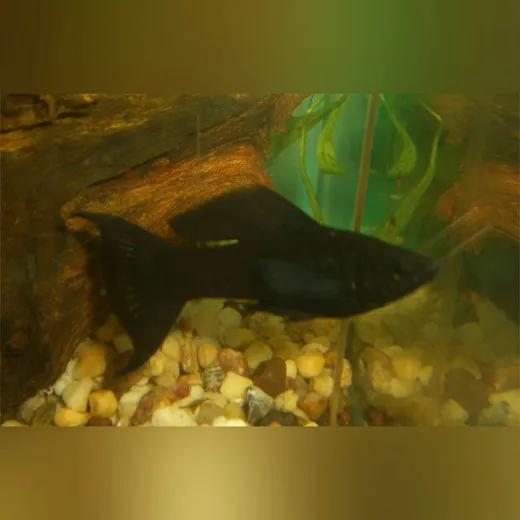
Black Lyre Molly
The black lyre molly has a lyre, or veil, tail with a longer dorsal fin. Like the popular common black molly, these fish are hardy, breed quickly and get along with everybody and every snail.
Quick Facts
| Scientific Name | Poecilia sphenops (aquarium-bred hybrids) |
|---|---|
| Origin | Mexico and Central America (wild ancestors); aquarium-bred |
| Care Level | Easy, good for beginners |
| Temperament | Peaceful |
| Adult Size | Up to 3–4″ |
| Lifespan | 3–5 years |
| Diet | Omnivore (needs plant matter) |
FAQ
What makes the black lyre molly different from other mollies?
The black lyre molly is distinguished by its lyre-shaped tail, which features a longer dorsal fin extending from the base. This gives it a unique and elegant appearance compared to other molly varieties.
Are black lyre mollies suitable for beginners?
Yes, black lyre mollies are easy to care for and are ideal for beginners due to their hardy nature and peaceful temperament.
What kind of diet do black lyre mollies require?
Black lyre mollies are omnivores and require a balanced diet that includes both animal and plant-based foods. Plant matter is especially important for their health and coloration.

Andrew Brown –
I’ve had black lyre mollies in my tank for six months now. They’re very active and peaceful, and they get along well with my other fish. The lyre tail is striking and adds a lot of visual interest. I feed them a mix of flakes and blanched vegetables every day.
Thomas MacDonald –
These fish are easy to keep and don’t stress other tank inhabitants. I noticed they breed quickly, which is great for a beginner. The plant matter in their diet keeps their color vibrant and they stay healthy.
Jane Mathis –
The black lyre molly is a beautiful addition to any community tank. They’re calm, don’t chase each other, and thrive in a well-maintained aquarium. I appreciate how they adapt to my tank’s conditions without much effort.