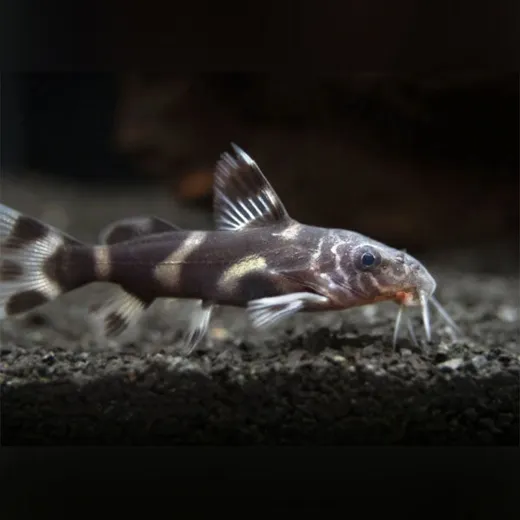
Mustard Catfish
Synodontis albolineatus, or mustard cat, has broad white lines on a chocolate body, and on the edges the white turns to a mustard color. Albo lineatus in fact is Latin for “white lines”. In the wild, these African catfish from Cameroon only grow to four inches, about the same in the fish tank. Synodontis albolineatus are hardy scavengers and will eat a bit of everything that falls to the bottom of the tank.
Quick Facts
| Scientific Name | Synodontis albolineatus |
|---|---|
| Origin | Cameroon |
| Care Level | Easy |
| Temperament | Peaceful |
| Adult Size | Up to 4″ |
FAQ
What does the mustard catfish look like?
The mustard catfish has a chocolate body with broad white lines that turn to mustard color at the edges. The name “albolineatus” means “white lines” in Latin.
Where do mustard catfish originate from?
Mustard catfish are native to Cameroon in Africa.
Are mustard catfish easy to care for?
Yes, they are considered easy to care for and are suitable for beginners.

Diane Terry –
I bought a mustard catfish for my 10-gallon tank. It’s very active and clean up the leftover food well. The color pattern is striking and it looks great with my other fish. Very peaceful and doesn’t bother others.
Emma Walker –
The fish arrived healthy and has been living in my tank for two months. It’s not flashy, but it’s reliable and helps keep the bottom of the tank clean. I like the unique appearance.
Jessica Brown –
Great addition to my community tank. It’s calm, eats the scraps, and doesn’t compete with other fish. The white lines stand out well against the dark background.