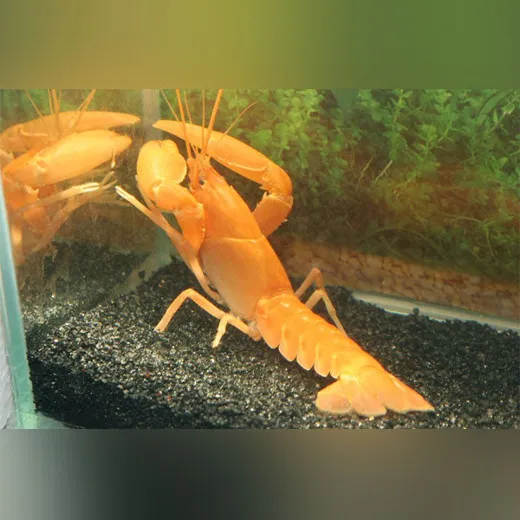
Neon Orange Lobster
Neon Orange Lobsters are bred for a vivid, bright, solid orange body. As they grow, they shed their shells. Soft-shelled (naked) crayfish are totally vulnerable until their shells re-harden and need a place to hide. Neon red lobsters, like all decapods, grow by eating lots of food and sucking in lots of water. This action eventually cracks their shells open, then they wriggle out of their former armor and hide while their new larger exoskeleton hardens. Neon orange lobsters cannot be kept with small shrimp or small schooling fish and will act like bullies to defend their home.
Quick Facts
| Scientific Name | Procambarus clarkii |
|---|---|
| Origin | Captive-bred (Florida) |
| Size (adult) | Up to 4 inches |
| Lifespan | 3 to 5 years |
FAQ
What is the scientific name of the Neon Orange Lobster?
The scientific name is Procambarus clarkii.
Do Neon Orange Lobsters need hiding places?
Yes, they need hiding places because they are vulnerable when soft-shelled and must hide while their new exoskeleton hardens.
Can Neon Orange Lobsters be kept with small shrimp or schooling fish?
No, they cannot be kept with small shrimp or small schooling fish as they will act aggressively to defend their territory.

Ian Johnston –
The neon orange lobster is very vibrant and stands out in the tank. It’s active and interesting to watch, especially during molting. I made sure to provide plenty of hiding spots and it has adapted well. Just avoid keeping it with small fish or shrimp.
Stephen Davies –
A striking addition to my aquarium. The color is bright and consistent. It takes time to adjust, but once it’s settled, it’s a great centerpiece. I’ve noticed it hides during molting, so I added some caves and rocks.
Stephen Hodges –
This lobster is more active than expected. It eats regularly and seems healthy. I’ve observed it molting twice now, and it always retreats to a dark corner. I keep it alone in a large tank with plenty of space.