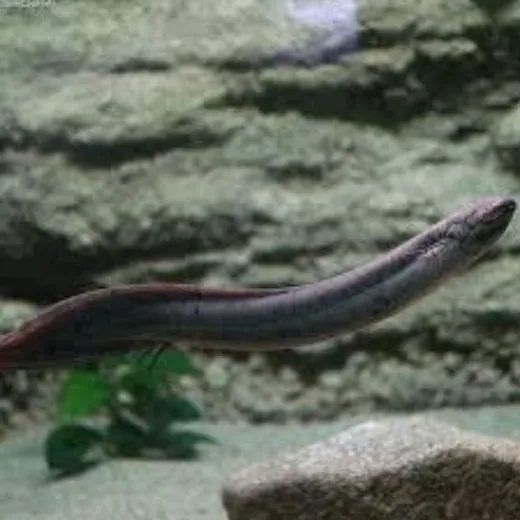
South American Lungfish
The South American lungfish lives in the swamps of the Amazon basin and will eventually grow to nearly four feet. At maturity, these creatures no longer use their gills and periodically rise to the top of the tank like a slow-moving whale and suck in air. In smaller sizes, these fish adapt well to most aquariums, but they will eat small critters that can fit into their small mouth. Generally, frozen food is all they need, but when under six inches, small black worms, feeder shrimp, and feeder fry work best.
Lungfish are solid black and, when small, like to stay in the leaves of plants when not feeding, so a few floating plants, plastic or natural, will help simulate their natural habitat. When they grow large, they go just about wherever they want.
Quick Facts
| Feature | Detail |
|---|---|
| Growth Size | Nearly four feet at maturity |
| Feeding Habits | Frozen food; small black worms, feeder shrimp, feeder fry when under six inches |
| Color | Solid black |
| Habitat Preference | Swamps of the Amazon basin; benefits from floating plants |
| Breathing Method | Uses lungs; rises to surface to absorb air when mature |
FAQ
What kind of food does the South American lungfish eat?
The South American lungfish primarily eats frozen food. When under six inches, small black worms, feeder shrimp, and feeder fry are recommended.
Do lungfish need special tank conditions?
Yes, they benefit from a well-planted tank with floating plants to mimic their natural habitat. They prefer a large tank with plenty of space, especially as they grow.
How does a lungfish breathe?
Lungfish use lungs and periodically rise to the surface to suck in air. They no longer rely on gills at maturity.




Isaac Short –
The lungfish is a fascinating addition to my aquarium. It moves slowly and looks very natural. I’ve noticed it rising to the surface occasionally, which is exactly how it behaves in the wild. The floating plants help it feel at home, and it’s not aggressive at all.
Lillian Black –
I bought this for my large tank and it has adapted well. It’s not active much, but it’s peaceful and adds a unique presence. Feeding it frozen food works perfectly, and it eats regularly.
Molly Hemmings –
The fish is impressive in size and behavior. It looks like a living relic from the Amazon. I’ve kept it for over six months and it’s still healthy and active in its natural movements.