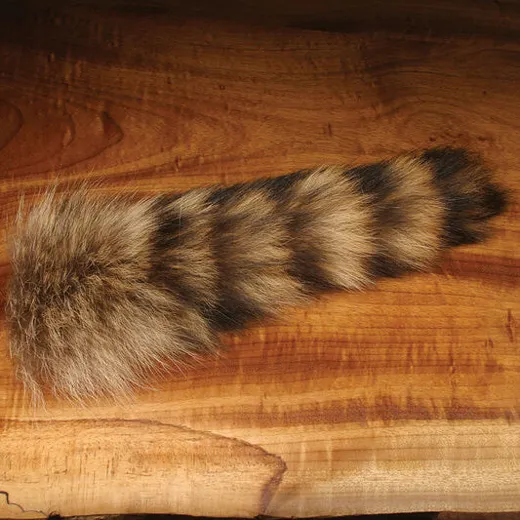
Complete Raccoon Tail – Hareline
The Complete Raccoon Tail from Hareline is a classic, ultra-versatile natural hair material for streamers, steelhead flies, and bass patterns. Raccoon hair is known for its soft texture, flowing movement, and natural banding, giving flies a lifelike pulse and silhouette in the water—especially at slower speeds.
Each full tail offers a wide range of hair lengths and textures, from softer underfur to longer guard hairs, making it easy to match profiles for everything from sculpins and leeches to traditional winged patterns. When you want maximum motion without excessive stiffness, raccoon tail is hard to beat.
Key Features
- Complete natural raccoon tail with varied hair lengths
| Feature | Description |
|---|---|
| Texture | Soft underfur and longer guard hairs for natural movement |
| Movement | Flows smoothly in water, ideal for slow-speed presentations |
| Appearance | Natural banding provides lifelike pulse and silhouette |
FAQ
What types of flies can use raccoon tail?
Raccoon tail is ideal for streamers, steelhead flies, and bass patterns. It works well in winged patterns and imitations of sculpins and leeches.
Is the raccoon tail suitable for slow-moving flies?
Yes, the soft texture and natural banding make it especially effective for slow-speed presentations where lifelike movement is key.
Does the tail come with different hair lengths?
Yes, each complete tail includes a mix of soft underfur and longer guard hairs for varied texture and natural appearance.
Stephen Parsons –
Used this tail for a new steelhead pattern and noticed a big difference in how the fly moves in the water. The soft texture and natural banding make it look and act like real prey. Great for slow presentations.
Alexandra Reid –
Perfect for matching leech imitations. The guard hairs add structure while the underfur gives a smooth, flowing motion. Works well with both dry flies and streamers.
Leah Kelly –
The tail is well-made and has a good mix of hair lengths. It’s a bit more expensive than synthetic options, but the realism in the water justifies the price.
Joanne Bell –
Used it in a bass pattern and saw better action in the water. The natural movement stands out, especially when the fly is drifting slowly.