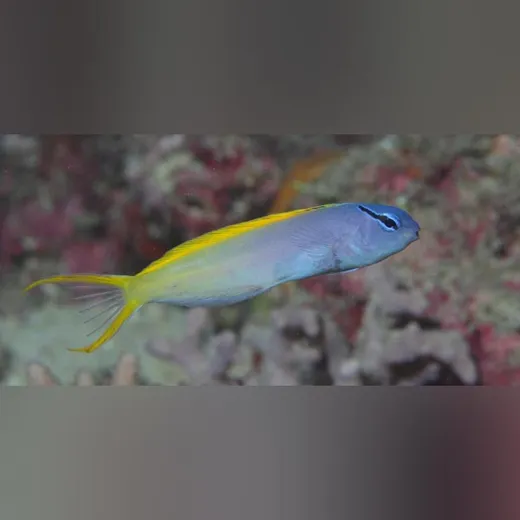
Forktail Blenny
The Forktail Blenny is also known as the Lyretail Fang Blenny or Yellowtail Fang Blenny. The Forktail Blenny has a caudal fin that resembles a fork, with two long exterior spines and five much shorter middle spines. The body is a pale blue that runs like watercolor into a bluish-yellow at the tail. Males are generally larger than females and experience a succession of color changes when breeding.
- Scientific Name: Meiacanthus atrodorsalis
- Origin: Pacific Ocean
- Lifespan: 4 years
- Max Size: 5 inches
- Diet: zooplankton, algae
- Shipping Size: 1 1/4 to 3 inches
| Feature | Detail |
|---|---|
| Scientific Name | Meiacanthus atrodorsalis |
| Origin | Pacific Ocean |
| Lifespan | 4 years |
| Max Size | 5 inches |
| Diet | zooplankton, algae |
| Shipping Size | 1 1/4 to 3 inches |
FAQ
What is the typical color pattern of the Forktail Blenny?
The body is pale blue with a watercolor-like transition into bluish-yellow at the tail. Males show more vivid color changes during breeding season.
How big does a Forktail Blenny grow?
The maximum size is 5 inches. Shipping size ranges from 1 1/4 to 3 inches.
What kind of diet does the Forktail Blenny require?
It primarily eats zooplankton and algae.
Irene Mackenzie –
The Forktail Blenny is a striking addition to my aquarium. Its unique forked tail stands out and it’s very active. I’ve noticed the color shifts when the male is breeding, which is fascinating to watch. Easy to care for and adapts well to my tank conditions.
Justin Mathis –
Great fish with a beautiful appearance. The blue and yellow tail pattern is eye-catching. It’s peaceful and doesn’t bother other fish. Feeds well on algae wafers and small zooplankton.
Adam Wilson –
I’ve had this blenny for six months and it’s still vibrant. The color changes during breeding season are impressive. It’s a hardy species and fits well in a medium-sized tank with good water flow.