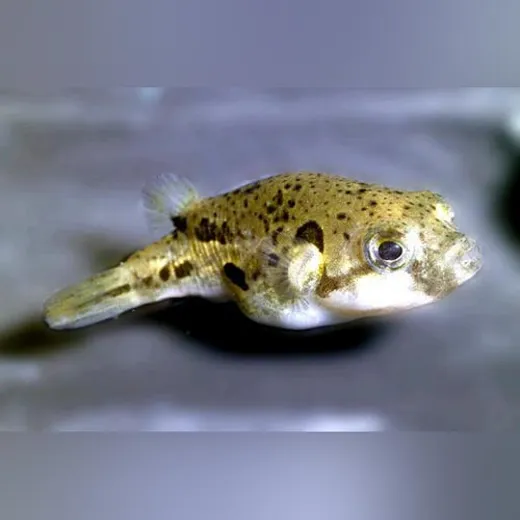
Indian Pea Puffer
Indian pea puffers, also called dwarf Indian puffers, do well in brackish and 100% freshwater aquariums. Pea puffers are caught in the wild and are seasonal – summer is when they start growing again so they are a bit more difficult to find and small during the summer months. These aquarium puffers are terrific baby snail eaters and do fine in planted aquariums and nano tanks. Oddly, these fish seem to handle themselves even among larger species without getting eaten. They are known to nip at the fins of their neighbors, but their mouths are so small it is generally not more than a nuisance.
Quick Facts
| Scientific Name | Carinotetraodon travancoricus |
|---|---|
| Origin | Southwestern India |
FAQ
What kind of water conditions do Indian pea puffers prefer?
Indian pea puffers thrive in both brackish and 100% freshwater environments. They adapt well to a variety of water conditions commonly found in home aquariums.
Are Indian pea puffers aggressive toward other fish?
They are generally peaceful and can coexist with larger species, though they may gently nip at the fins of nearby fish due to their small mouths. This behavior is usually minor and not harmful.
How often are Indian pea puffers available for purchase?
Pea puffers are seasonal, with availability increasing during the summer months when they begin to grow. They are less commonly found during the summer due to their small size at that time.
Julia Walsh –
I added an Indian pea puffer to my 10-gallon planted tank and it has been very calm. It eats snails and small invertebrates without causing any issues. The fish seems happy and active, and it doesn’t bother other fish much. A great choice for a small, peaceful community tank.
Audrey Morrison –
The pea puffer is small and fits well in my nano tank. It doesn’t eat much and seems to be content with the plants and snails. I noticed it gently nips at one fish’s fin, but it’s not a big problem. Overall, a good addition to a balanced aquarium.
Nicola Carr –
I’ve had this puffer for three months now and it’s thriving. It’s very active and eats snails efficiently. It doesn’t stress other fish and stays in one area. Perfect for a beginner looking for a low-maintenance, peaceful fish.