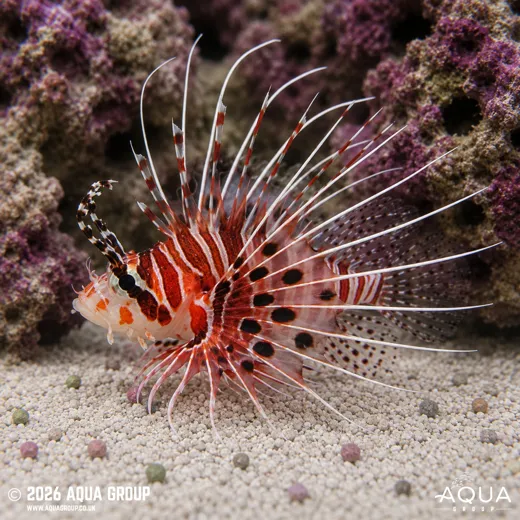
Antennata Lionfish (Pteropterus antennatus)
The Antennata Lionfish, Pteropterus antennatus, is a striking Indo-Pacific predator recognised by its broad red-brown body bands, fan-like pectoral fins, long dorsal spines and distinctive tentacles above the eyes. Still widely traded under its former scientific name, Pterois antennata, it is also known as the Spotfin Lionfish, Broadbarred Firefish or Ragged-finned Firefish. This nocturnal ambush hunter spends the day sheltering beneath reef ledges before emerging to feed on small fish and crustaceans. Although it does not normally eat coral tissue, its venomous spines and strongly predatory nature make it suitable only for carefully planned marine aquariums managed by experienced fishkeepers.
Key Features
| Feature | Description |
|---|---|
| Scientific Name | Pteropterus antennatus |
| Common Names | Spotfin Lionfish, Broadbarred Firefish, Ragged-finned Firefish |
| Behavior | Nocturnal ambush predator; shelters during day |
| Diet | Small fish and crustaceans |
| Environment | Indo-Pacific marine reefs |
| Compatibility | Only suitable for experienced aquarists |
FAQ
What is the typical habitat of the Antennata Lionfish?
The Antennata Lionfish is native to Indo-Pacific marine reefs, where it spends its day sheltering beneath reef ledges and emerges at night to hunt.
Is the Antennata Lionfish safe for beginner aquariums?
No, the Antennata Lionfish is not suitable for beginner aquarists due to its predatory nature and venomous spines.
What does the Antennata Lionfish eat?
It feeds on small fish and crustaceans, making it a predatory species that requires a well-planned diet in a marine aquarium.



Adam Mathis –
This lionfish is a stunning addition to my reef tank. I’ve had it for six months and it’s active at night, hunting small fish without damaging coral. The tentacles and coloration are impressive. Only recommend for experienced marine keepers with proper tank setup.
Amanda Fisher –
Beautiful fish with unique appearance. I noticed it hides during the day and comes out at night. Feeding it small shrimp and fish works well. Requires careful tank planning and monitoring.
Carol Simpson –
The fish looks great and is active at night. However, it’s aggressive and needs a large tank with plenty of hiding spots. Not recommended for small or beginner setups.