Coral Beauty (Centropyge bispinosa)
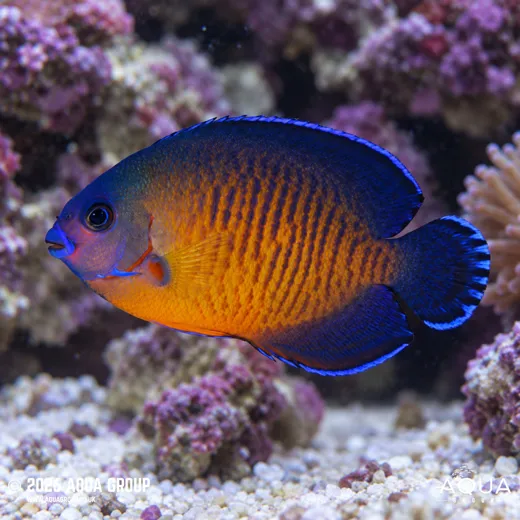
The Coral Beauty, Centropyge bispinosa, is one of the most popular dwarf marine angelfish, admired for its deep blue-purple body, orange to red-orange flanks and electric blue fin edging. Also known as the Twospined Angelfish, this hardy and colourful species is well suited to mature marine aquariums with plenty of live rock for grazing and shelter. It can be kept in reef aquariums with caution, but like most dwarf angels it may nip at some corals or clam mantles, so it is not guaranteed reef safe.
Common Name
Coral Beauty, Coral Beauty Angelfish, Twospined Angelfish, Dusky Angelfish, Two-spined Angelfish.
Scientific Name (Latin)
Centropyge bispinosa
Maximum Size
| Size | Details |
|---|---|
| Length | Up to 5 inches (12.7 cm) |
FAQ
Is the Coral Beauty reef safe?
The Coral Beauty may nip at some corals or clam mantles, so it is not guaranteed reef safe. It is best suited for aquariums with plenty of live rock and adequate shelter.
What are the key color features of the Coral Beauty?
The Coral Beauty has a deep blue-purple body, orange to red-orange flanks, and electric blue fin edging, making it a visually striking addition to a marine tank.
What kind of environment does the Coral Beauty require?
It thrives in mature marine aquariums with live rock for grazing and shelter. A stable saltwater environment with proper water parameters is essential.



Richard Fisher –
The Coral Beauty is a stunning fish with vibrant colors. It’s active and peaceful in a well-established tank with plenty of live rock. I noticed it occasionally nipped at a soft coral, so I’ve rearranged the layout to avoid that. Overall, a great addition to a marine setup.
Audrey Burgess –
Beautiful fish with a unique color pattern. It’s easy to care for and adapts well to my tank. I keep it in a 55-gallon reef tank with plenty of rock. Just make sure to monitor coral placement to avoid any damage.
Carolyn Reid –
Arrived healthy and quickly settled into the tank. The blue and orange colors stand out in the aquarium. I’ve observed it grazing on algae, which helps maintain tank cleanliness.