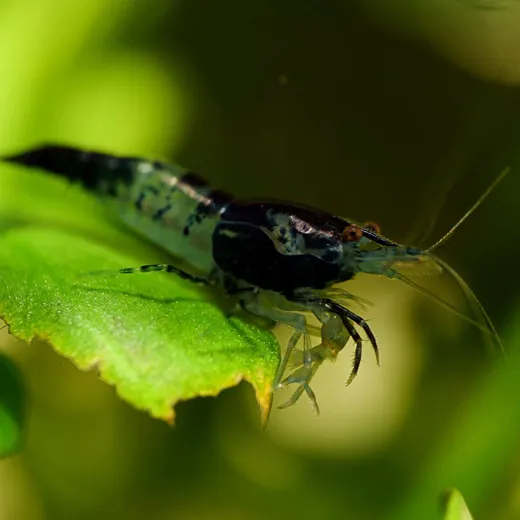
Carbon Rili Neocaridina Shrimp Bio
The Carbon Rili Neocaridina Shrimp is the underwater equivalent of a starry night, with its captivating dark body and twinkling clear spots that mimic the night sky. These little critters bring a touch of cosmic wonder to your aquarium, turning it into a scene from a tranquil, starlit evening. They glide through the water with ease, their unique patterns offering a mesmerizing display that draws you into a world of quiet reflection and beauty. Caring for them is as straightforward as wishing on a star, making your tank not just a home for these enchanting creatures, but also a canvas for their spellbinding dance. Watching them, you can’t help but feel you’ve captured a piece of the universe, right
Specifications
| Feature | Detail |
|---|---|
| Species | Neocaridina davidi (Carbon Rili variant) |
| Size | 1.5 to 2.0 cm |
| Lifespan | 2 to 3 years |
| Water Temperature | 22–26°C |
| Water pH | 6.5–7.5 |
| Compatibility | Peaceful community tanks |
FAQ
What is the ideal water temperature for Carbon Rili Neocaridina Shrimp?
The ideal water temperature is between 22 and 26 degrees Celsius.
How long do these shrimp typically live?
They typically live for 2 to 3 years with proper care.
Are Carbon Rili Shrimp compatible with other aquarium inhabitants?
Yes, they are peaceful and compatible with most community tank fish and invertebrates.


Steven Ogden –
The shrimp are beautiful and active. They add a lot of visual interest to my tank. I’ve kept them for over six months and they’re still healthy and active. Easy to care for and don’t require much maintenance.
Caroline Forsyth –
I was impressed by how quickly they adapted to the tank. Their dark bodies with clear spots look stunning under soft lighting. I don’t see any aggression, and they seem to coexist well with my small fish.
Kylie Davies –
These shrimp are a perfect addition to a quiet, low-maintenance aquarium. They don’t hide much and are always moving around, creating a peaceful, natural look. I love the way they look like tiny stars in the water.