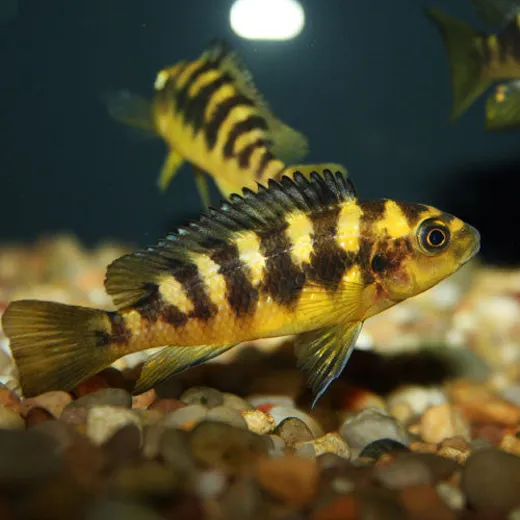
Bumblebee Cichlid
Just like the name, this “honey” of a fish has the coloration of a bumblebee. The bumblebee cichlid can handle aggressive cichlids like buttikoferi and zebras. It’s a very active fish and seems to enjoy navigating the whole tank. Both males and females show the bold yellow and black pattern.
Quick Facts
| Scientific Name | Pseudotropheus crabro |
|---|---|
| Origin | Lake Malawi, Africa |
| Care Level | Moderate |
| Temperament | Aggressive (territorial rock-dweller) |
| Adult Size | Up to 5–6″ |
| Lifespan | 6–10 years |
| Diet | Vegetarian and omnivorous; accepts flake, pellet, and live foods |
FAQ
What is the ideal tank size for a bumblebee cichlid?
A minimum of 55 gallons is recommended to provide enough space for territorial behavior and swimming activity.
Can bumblebee cichlids live with other cichlid species?
They can coexist with other cichlids, but only if the tank is large and the species are not overly aggressive. Avoid mixing with very aggressive species unless properly sized and managed.
How should I feed a bumblebee cichlid?
Feed a balanced diet of high-quality cichlid pellets, flakes, and occasional live or frozen foods such as bloodworms or daphnia.
Bella Bond –
The bumblebee cichlid is a striking addition to my tank. It’s active and shows vibrant coloration, especially in the sunlight. I’ve had it for six months and it’s still healthy and curious about its surroundings. It doesn’t dominate the tank like some other cichlids, which makes it a good fit for a mixed community.
Ruth Walker –
I bought this fish to add color and movement. It’s very active and enjoys exploring the rocks. The yellow and black pattern is beautiful. I do need to monitor its territory, as it can become territorial during feeding times.
Anthony Abraham –
Great fish for a Malawi tank. The color is vivid and the fish is quite lively. It coexists well with a few other cichlids, especially when the tank is large and has plenty of hiding spots.