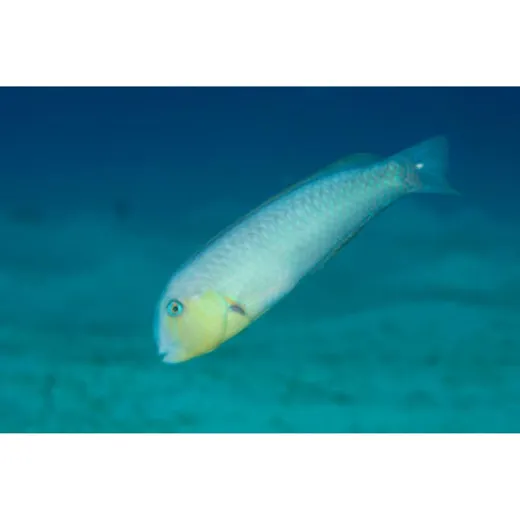
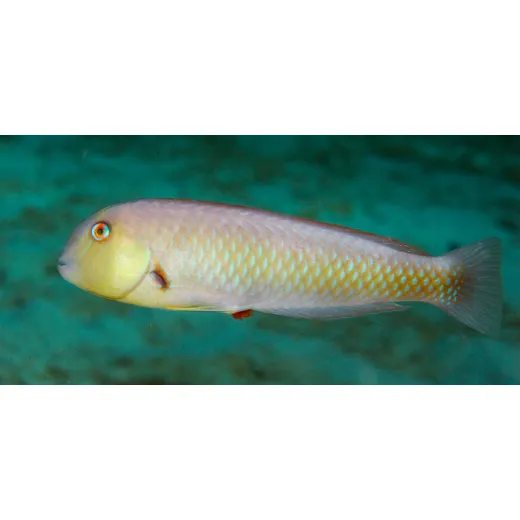
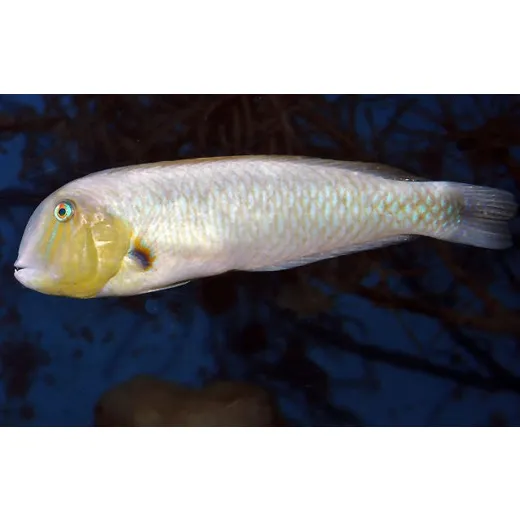
Rosy Razorfish (Xyrichtys martinicensis): sometimes known as “Straight-Tail Razorfish”
These are a newer item to us – we do not find them as often as our other wrasse. We are excited to share these beautiful specimen with you.
These fish are carnivores and will eat worms, crustaceans (shrimp/crabs), and gastropods/bivalves.
The Rosy Razorfish tends to stay close to the bottom of the tank or ocean floor. We typically find them in submerged vegetation, but always on a soft bottom (sand/mud/mangrove/seagrass).
| Species | Xyrichtys martinicensis |
|---|---|
| Common Name | Rosy Razorfish, Straight-Tail Razorfish |
| Diet | Carnivore: worms, crustaceans (shrimp, crabs), gastropods/bivalves |
| Habitat | Soft bottom environments: sand, mud, mangrove, seagrass; near submerged vegetation |
FAQ
What does the Rosy Razorfish eat in a home aquarium?
The Rosy Razorfish is a carnivore and will eat worms, crustaceans like shrimp or crabs, and gastropods or bivalves.
Where does the Rosy Razorfish prefer to live in an aquarium?
It tends to stay near the bottom of the tank, preferably on soft substrates such as sand, mud, mangrove, or seagrass, and often in areas with submerged vegetation.
How common is the Rosy Razorfish in the aquarium trade?
The Rosy Razorfish is a newer addition to our inventory and is not as frequently found as other wrasse species.


Dylan Bond –
The Rosy Razorfish is a striking addition to my tank. It stays near the bottom in the sand area and seems active during feeding times. I feed it small crustaceans and worms, which it consumes readily. It’s a peaceful fish that doesn’t dominate the space.
Anthony Abraham –
I’ve had this fish for a few weeks now and it’s adapted well to the soft sand substrate. It’s curious and often explores the edges of the vegetation. Feeding it shrimp and worms works well. A nice touch to a tropical setup.
Ava Taylor –
The fish is beautiful with its rosy coloring and active behavior. It’s not aggressive and prefers the bottom area. I keep it in a planted tank with soft sand, and it’s thriving. Easy to care for once you know its feeding preferences.