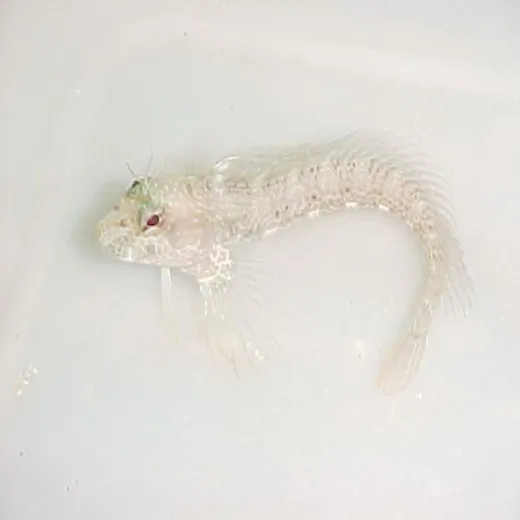
Glass Blenny Care Guide
The Glass Blenny requires a minimum tank size of 30 gallons with a sandy substrate and scattered rocks for hiding spots. This species is generally peaceful when given ample space. In smaller tanks, they may become aggressive toward other blennies, gobies, and dartfishes. They are not suitable for reef tanks as they will consume fleshy corals. Feed regularly with frozen or live brine shrimp and other frozen foods.
Tank Requirements
| Parameter | Requirement |
|---|---|
| Tank Size | At least 30 gallons |
| Substrate | Sandy bottom |
| Hiding Spots | Scattered rocks |
| Compatibility | Peaceful in spacious tanks; avoid small enclosures and reef environments |
| Feeding | Frozen or live brine shrimp, other frozen foods |
FAQ
Is the Glass Blenny safe to keep with other fish?
The Glass Blenny is generally peaceful in a spacious tank. However, in smaller enclosures, it may become aggressive toward blennies, gobies, and dartfishes. It is not recommended for tanks with small or shy fish.
Can the Glass Blenny live in a reef tank?
No, the Glass Blenny is not reef safe as it will eat fleshy corals.
What should I feed my Glass Blenny?
Feed frozen or live brine shrimp and other suitable frozen foods.
Sam Churchill –
The Glass Blenny is active and curious in a 40-gallon tank with plenty of rocks and sand. It doesn’t bother other fish as long as the tank is large enough. I feed it brine shrimp twice a week and it seems to enjoy it.
Anne Knox –
It’s a good addition to a larger saltwater tank. I noticed it hides under rocks during the day and becomes more active at night. I had to remove a small goby after a few weeks, but it’s not a major issue in a spacious setup.
Rose Jackson –
The blenny is fine in a 30-gallon tank, but I saw it chasing a dartfish. I now keep it in a larger tank with more hiding spots. It’s not aggressive, but space matters.