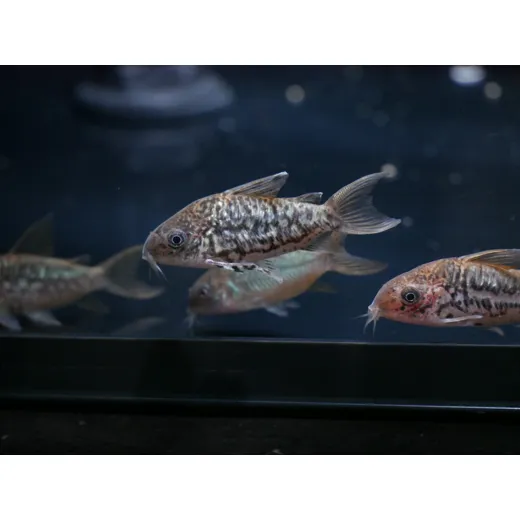
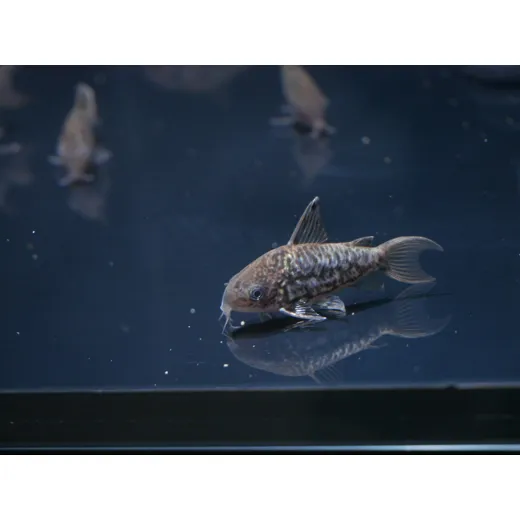
Pantanalensis Corydoras (C005 Brochis pantanalensis)
The Pantanalensis Corydoras (C005 Brochis pantanalensis) is a medium-sized freshwater catfish native to the crystal-clear wetlands of the Pantanal region in Southern Brazil and Bolivia. Known for its striking appearance, adult males showcase a brilliant iridescent spotted pattern during breeding, making them one of the most visually stunning Corydoras species available.
This hardy and peaceful bottom-dwelling catfish thrives in groups, benefiting from its natural schooling behavior. Due to their larger adult size, Pantanalensis Corydoras catfish are ideal as bottom feeders and dither in community tanks with medium-sized South or Central American cichlids or other predatory fish that are unlikely to prey on them.
Specifications
| Parameter | Value |
|---|---|
| Scientific Name | Brochis pantanalensis |
| Size (adult) | 3.5 – 4.5 inches |
| Temperature Range | 72°F – 82°F |
| Water pH | 6.0 – 7.5 |
| Hardness | 2 – 10 dGH |
| Behavior | Peaceful, schooling |
| Feeding | Bottom feeder, omnivorous |
FAQ
What is the ideal tank size for Pantanalensis Corydoras?
A minimum of 20 gallons is recommended to accommodate their schooling behavior and provide enough space for movement and feeding.
Do Pantanalensis Corydoras require special water conditions?
They prefer slightly soft to moderately hard water with a pH between 6.0 and 7.5 and a temperature range of 72°F to 82°F.
Can they coexist with aggressive fish?
Please contact customer service


Evan Abraham –
These corydoras are beautiful and active in the tank. They form a nice school and stay calm even with other fish. The iridescent spots on males during breeding season are stunning. Easy to care for and feed regularly with sinking pellets.
Diane Forsyth –
Great addition to my community tank. They don’t stress other fish and stay near the bottom where they feed. The coloration is vibrant, especially when the lights are on. A bit shy at first but settle in quickly.
Katherine Bond –
I’ve had these for over six months and they’re still healthy and active. They enjoy the substrate and eat a variety of foods. Perfect for a peaceful, visually appealing aquarium.