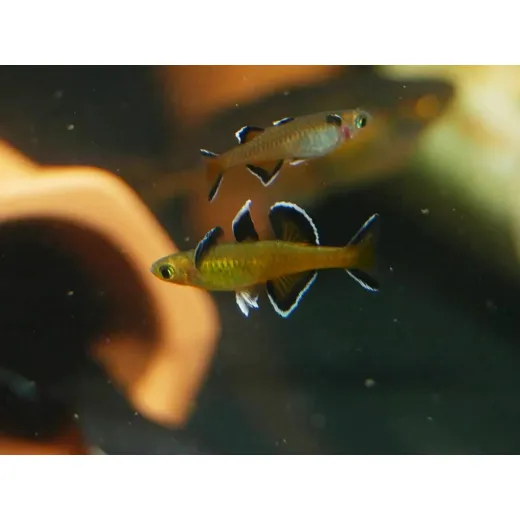
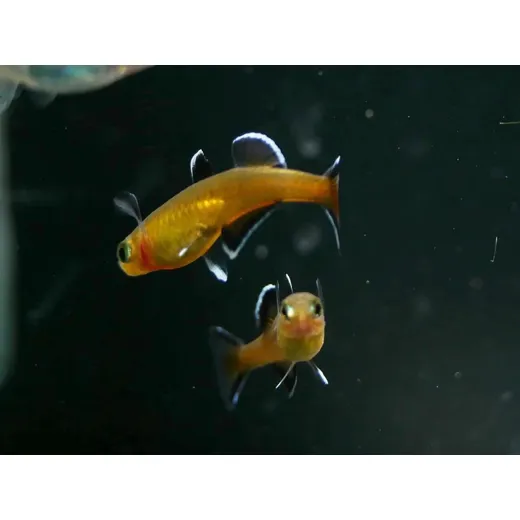
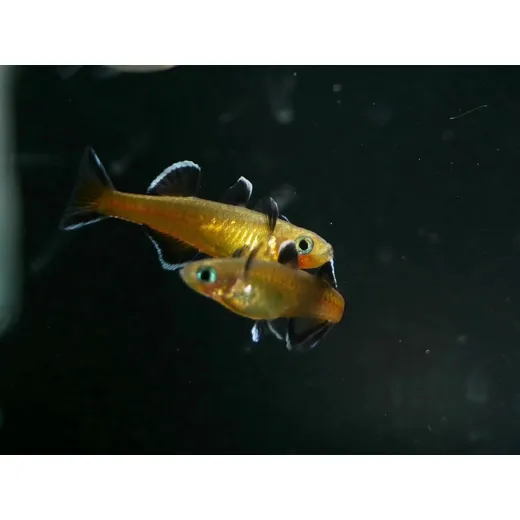
Honey Blue Eye (Pseudomugil Mellis)
One of the rarest Pseudomugil species, extremely difficult to find. We are fortunate enough to have a small group available for public purchase. Males and females are available upon request; please specify your preference when placing an order.
Honey Blue-eyes are a small, eye-catching Pseudomugil native to Australia. These nano fish rarely exceed 1.5 inches in captivity. Males display a golden ‘honey-yellow’ body with black and white trims on their fins. With high-quality frozen and live foods, spawning and fry rearing are manageable.
Pseudomugil mellis thrive in softer water but can be acclimated to neutral or even alkaline conditions. Due to their Australian origin, they have a wide temperature tolerance and can be successfully kept outdoors in pond environments.
| Specs | Details |
|---|---|
| Species | Pseudomugil mellis |
| Size | Up to 1.5 inches |
| Gender | Males and females available |
| Temperature Range | Wide tolerance, suitable for outdoor pond conditions |
| Water Preference | Soft water; can adapt to neutral or alkaline |
| Feeding | Frozen and live foods recommended |
FAQ
Can I request a specific gender for my order?
Yes, you can request a male or female. Please let us know your preference when placing your order.
What kind of food do Honey Blue Eyes prefer?
They prefer high-quality frozen and live foods for optimal health and breeding success.
Can these fish be kept outdoors in a pond?
Yes, due to their wide temperature tolerance, they can be successfully kept outdoors in pond conditions.
Dominic Morrison –
Received a male Honey Blue Eye and he’s been thriving in my 10-gallon tank. The color is vibrant and he’s very active. I feed him frozen daphnia and bloodworms regularly. He’s easy to care for and looks stunning in the tank.
Oliver Ogden –
Hard to find, but worth the effort. The fish are small and colorful, with a unique honey-yellow hue. I kept one male and one female, and they coexist peacefully. Feeding them live foods makes a big difference in their health.
Phil Fraser –
This is one of the rarest fish I’ve ever seen. The male has a beautiful golden body with white and black fin trims. I’ve kept him in a soft water setup and he’s very active. Spawning is possible with proper feeding.