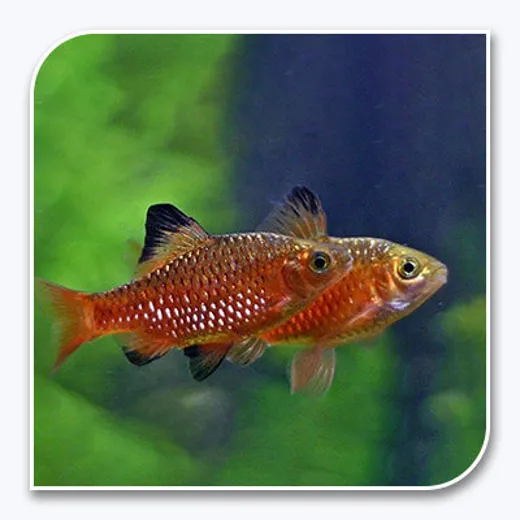
Rosy Barb (Puntius conchonius)
Scientific Name: Puntius conchonius
Common Name: Rosy Barb, Red Barb
Adult Size: 6 inches
Life Expectancy: 5 years
Habitat: Northern India, Bangal, and Assam
Minimum Tank Size: 30 gallons
Ideal Tank Conditions:
- Temperature Range: 74 – 79°F
- pH Range: 6.0 – 7.0
- Water Hardness: 4 – 10
Temperament: Semi-aggressive
Diet & Nutrition: Omnivore; will generally eat all kinds of live, fresh, and flake foods. To keep a good balance, give them a high quality flake food every day. Feed brine shrimp and other live foods occasionally.
| Parameter | Value |
|---|---|
| Scientific Name | Puntius conchonius |
| Common Name | Rosy Barb, Red Barb |
| Adult Size | 6 inches |
| Life Expectancy | 5 years |
| Habitat | Northern India, Bangal, and Assam |
| Minimum Tank Size | 30 gallons |
| Temperature Range | 74 – 79°F |
| pH Range | 6.0 – 7.0 |
| Water Hardness | 4 – 10 |
| Temperament | Semi-aggressive |
| Diet | Omnivore (flake, live, fresh foods) |
FAQ
What is the ideal water temperature for Rosy Barb?
The ideal water temperature range for Rosy Barb is 74 to 79°F.
Can Rosy Barb live in a community tank with other fish?
Rosy Barb are semi-aggressive and may not get along well with very small or timid fish. They can coexist with similarly sized, active fish in a well-maintained community tank.
What type of food should I feed my Rosy Barb?
Feed a high-quality flake food daily. Supplement with live or frozen foods like brine shrimp or daphnia for balanced nutrition.
Lucas Allan –
The Rosy Barb are active and colorful. They thrive in a 30-gallon tank with stable water conditions. I feed them flakes daily and offer brine shrimp twice a week. They’re semi-aggressive but don’t harm other fish in the tank.
Liam Hunter –
Great fish to add to a community tank. They stay active and show vibrant colors. I keep them at 76°F with a pH of 6.8. Feeding them a mix of flakes and live food keeps them healthy.
Benjamin Hamilton –
Easy to care for and very lively. The fish adapt well to my tank setup. I maintain a consistent temperature and water parameters. They eat well and don’t require much attention.