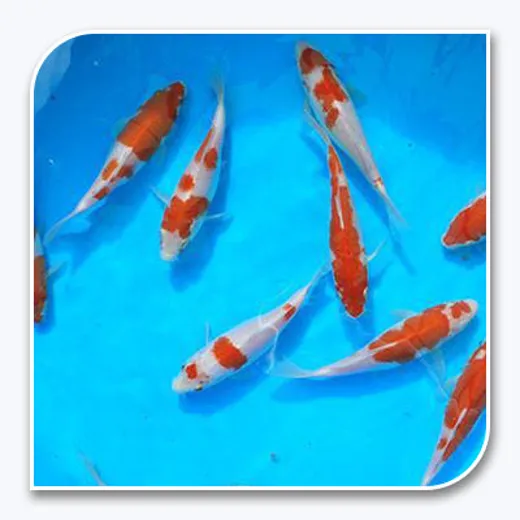
Koi | Kohaku Koi
Scientific Name: Cyprinus carpio
Common Name: Koi
Adult Size
34 – 36 inches
Life Expectancy
25 – 35 years
Habitat
Lakes and large rivers in Europe and Asia
Minimum Pond Size
1000 gallons
Ideal Tank Conditions
- Temperature Range: 34 – 90°F
- pH Range: 7.0 – 8.6
- Water Hardness: 150 ppm
Temperament
Peaceful
Diet & Nutrition
Omnivore; the appearance and health of Koi are dramatically impacted by diet. The staple diet of Koi is a quality pellet or flake food that does not exceed 30% protein. But to optimize growth potential and color, it is also recommended to include a variety of vegetables and plant matter.
| Parameter | Value |
|---|---|
| Scientific Name | Cyprinus carpio |
| Common Name | Koi |
| Adult Size | 34 – 36 inches |
| Life Expectancy | 25 – 35 years |
| Habitat | Lakes and large rivers in Europe and Asia |
| Minimum Pond Size | 1000 gallons |
| Temperature Range | 34 – 90°F |
| pH Range | 7.0 – 8.6 |
| Water Hardness | 150 ppm |
| Temperament | Peaceful |
| Diet Type | Omnivore |
FAQ
What is the ideal water temperature for Kohaku Koi?
The ideal water temperature range for Kohaku Koi is 34 to 90°F.
Can Koi live in a small pond?
No, Koi require a minimum pond size of 1000 gallons to thrive.
What kind of diet should I provide for my Koi?
Koi are omnivores and should be fed a high-quality pellet or flake food with no more than 30% protein. To enhance color and health, supplement with vegetables and plant matter.
Carl Hart –
My Kohaku Koi has been thriving in a 1500-gallon pond for over two years. The fish is active and maintains vibrant colors with a balanced diet of pellets and boiled vegetables. It’s peaceful and doesn’t stress other pond inhabitants.
Victor Peake –
The koi arrived healthy and has adapted well to our pond. We feed it a mix of commercial pellets and spinach, which has improved its color significantly. It’s a beautiful addition to our outdoor space.
Hannah Campbell –
We’ve had this koi for three years now. It’s grown steadily and remains calm even during temperature fluctuations. The water parameters are stable, and we maintain a consistent feeding schedule.