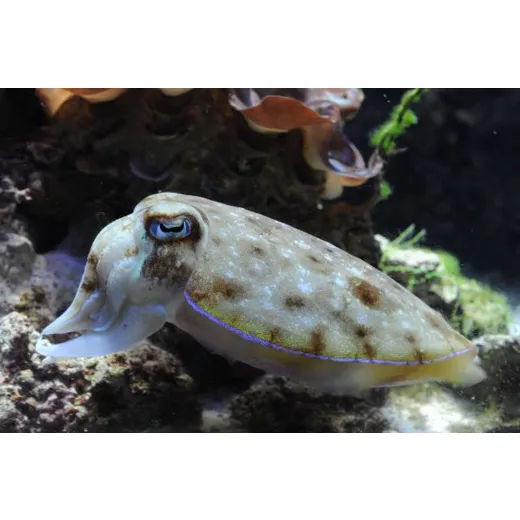
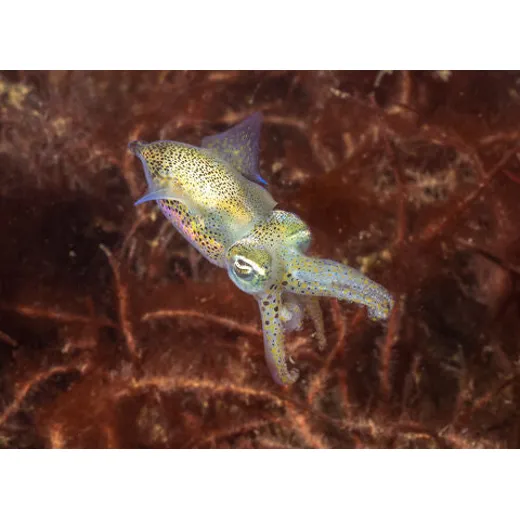
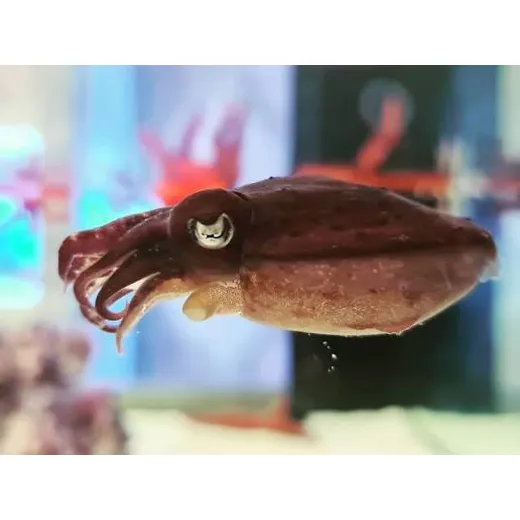
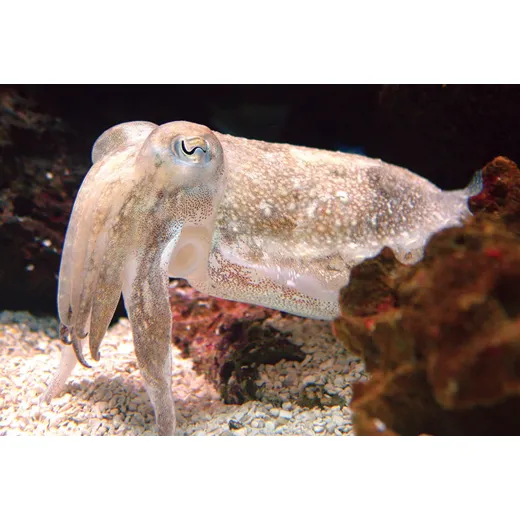
Dwarf Cuttlefish (Sepia bandensis) – Size S (1″ to 2″)
Dwarf Cuttlefish are intelligent cephalopods known for their color-changing abilities and unique behaviors. They grow to 2–3 inches in maturity and can rapidly shift patterns and hues to match their environment or mood.
Native to the Indo-Pacific, these creatures thrive in cooler saltwater conditions between 68–74°F. They require plenty of hiding spots and live rock for shelter and natural behavior.
Feeding involves live prey such as small crustaceans or fish. Due to their predatory nature, they should be kept with minimal tank mates. Stable water parameters are essential for their health and well-being.
These animals display remarkable problem-solving skills and interactive behaviors, making them a fascinating addition to experienced marine aquariums.
| Size | Temperature Range | Feeding | Compatibility |
|---|---|---|---|
| 1″ to 2″ (mature size: 2″–3″) | 68°F to 74°F | Live prey (e.g., small crustaceans, fish) | Minimal tank mates due to predatory nature |
FAQ
What is the typical size of a Dwarf Cuttlefish at maturity?
Dwarf Cuttlefish grow to 2–3 inches in maturity, though this product is labeled as Size S (1″ to 2″) for younger specimens.
What water temperature range do Dwarf Cuttlefish prefer?
They thrive in cooler saltwater environments between 68°F and 74°F.
What do Dwarf Cuttlefish eat?
They require live prey such as small crustaceans or fish for proper nutrition.


Justin Greene –
The dwarf cuttlefish is very active and changes colors frequently. I’ve kept it for three months and it’s always curious about what’s in the tank. It needs live food, which I’ve had to source, but the behavior is worth it. I’m an experienced aquarist and this species is a real highlight.
Benjamin Lewis –
It’s fascinating to watch how it blends into the rocks and changes color. I’ve set up a 20-gallon tank with live rock and it’s doing well. Feeding is a bit of a challenge, but the intelligence and interaction are impressive.
Stewart Blake –
This cuttlefish has become a centerpiece in my tank. It’s not just pretty—it thinks and reacts to stimuli. I’ve noticed it hides during the day and emerges at night. I’m committed to maintaining stable water conditions and providing live food.