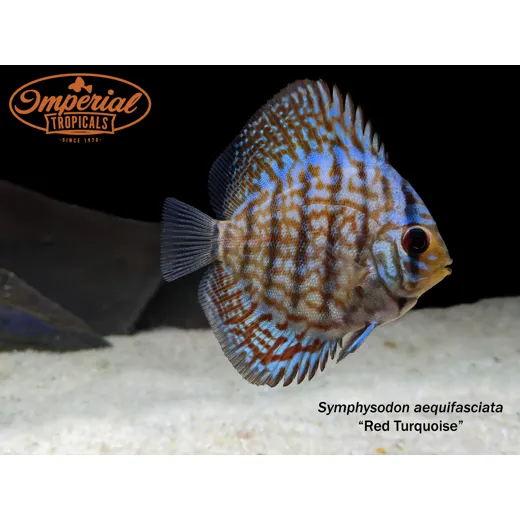
Red Turquoise Discus
Discus are often referred to as the king of aquarium fish. This nickname arose from the sheer beauty of these fish along with their reputation for being difficult to care for, making those who keep them successfully revered within the hobby. It being difficult to keep discus was an opinion developed when majority of specimens available were wild caught. With most now being captive bred and even line bred to produce many different color variants such as turquoise and pigeon blood, they are much more hardy. That being said, discus still require very clean, soft, acidic water with little to no nitrates and warm temperatures.
These peaceful cichlids tend to be timid, especially when it comes to feeding, so they shouldn’t be kept with overly boisterous or aggressive fish.
| Specifications |
|---|
| Species: Red Turquoise Discus |
| Origin: Captive bred |
| Water Type: Soft, acidic, low nitrates |
| Temperature: Warm (26-28°C) |
| Behavior: Peaceful, timid during feeding |
FAQ
What is the ideal water condition for Red Turquoise Discus?
Red Turquoise Discus require soft, acidic water with little to no nitrates and warm temperatures between 26-28°C.
Are Red Turquoise Discus suitable for community tanks?
No, they are peaceful but timid, especially when feeding, and should not be kept with overly boisterous or aggressive fish.
Can Red Turquoise Discus be bred in captivity?
Yes, most Red Turquoise Discus are now captive bred and line bred to produce consistent color variants.



Sonia Sharp –
The Red Turquoise Discus looks stunning in my 55-gallon tank. After adjusting the water parameters to soft, acidic conditions, they’ve become active and healthy. I appreciate the improved hardiness compared to older wild-caught specimens.
Nicola Davidson –
Beautiful fish with vibrant turquoise coloration. They’re calm and don’t stress the tank mates. I had to maintain soft water and stable temperature, but it’s worth the effort.
Sarah Walsh –
First time keeping discus and this breed exceeded my expectations. The fish are active and show good color even after a few weeks. I’ve kept them with peaceful community fish and they coexist well.