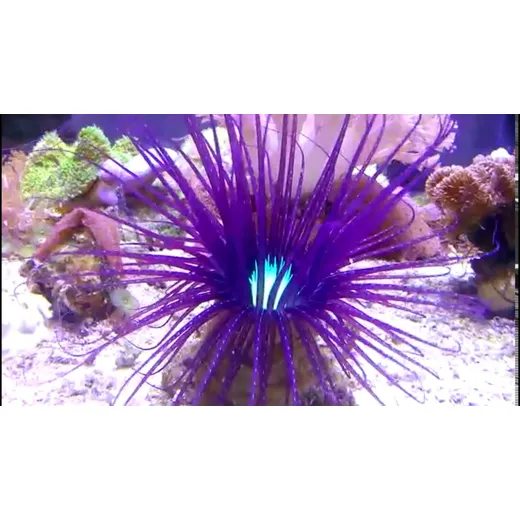
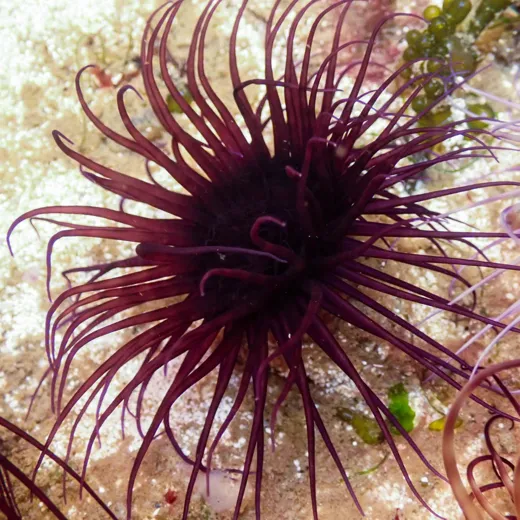
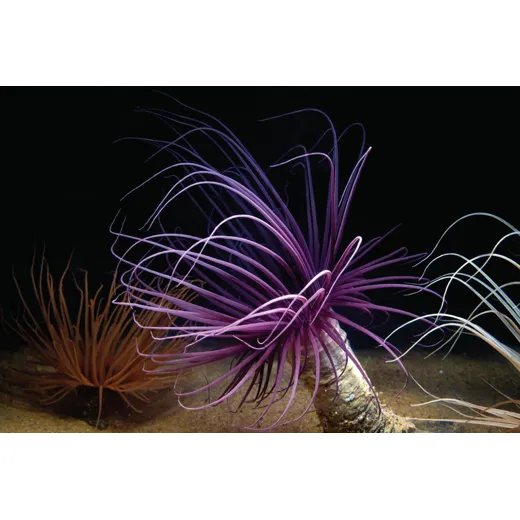
Ceriathus spp. Midnight Purple Tube Anemone
Species: Ceriathus spp.
Note: Specimens may have variations in color beyond midnight purple. Each specimen is unique and visually stunning. It’s enjoyable to watch them use their tentacles to grab leftover fish food and bring it to their mouth.
Product Specifications
| Feature | Value |
|---|---|
| Reef Compatible | Yes |
| Care Level | Intermediate |
| Disposition | Aggressive |
| Minimum Tank Size | 30 gallons |
| Mature Size | 8 inches |
| Placement in Tank | Sand |
| Light Level | Low |
| Water Flow | Medium |
| Size (Approx) | M: 3″ to 4″ |
FAQ
Is this anemone safe to keep with other marine life?
Due to its aggressive disposition, this anemone may pose a threat to other tank inhabitants. It is recommended to keep it in a tank with compatible, hardy species and avoid housing it with small or slow-moving fish.
How should I position the anemone in my tank?
Place the anemone on the sand bed where it can anchor itself. Ensure the area has medium water flow and low light conditions for optimal health.
Can this anemone survive in a low-flow tank?
Please contact customer service
Alexander Dickens –
The anemone arrived healthy and looks beautiful in my 30-gallon tank. It’s active and shows interest in fish food, which is entertaining to watch. I’ve noticed it extends its tentacles when food is nearby. I’m cautious about adding new fish due to its aggressive nature.
Sean Carr –
It’s a striking purple anemone with unique color variation. I placed it on the sand bed and it settled well. The care level is intermediate, so I’ve adjusted water flow and lighting accordingly. It’s not aggressive toward my larger fish, but I keep a close eye on smaller ones.
Rose Mathis –
The anemone looks nice, but it has been a bit aggressive toward a small shrimp. I’ve moved it to a corner with less traffic. It seems to thrive in low light and medium flow. I’d recommend caution when pairing with small invertebrates.