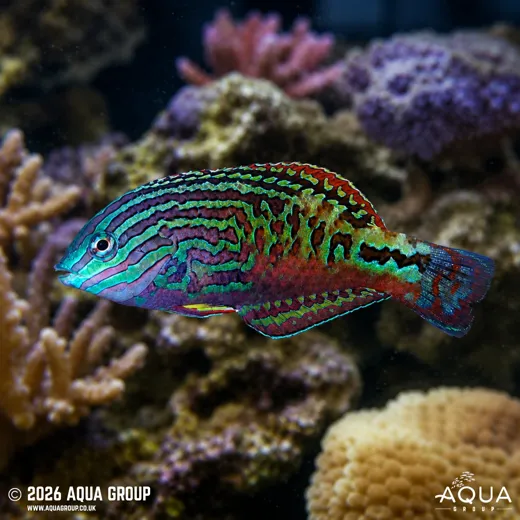
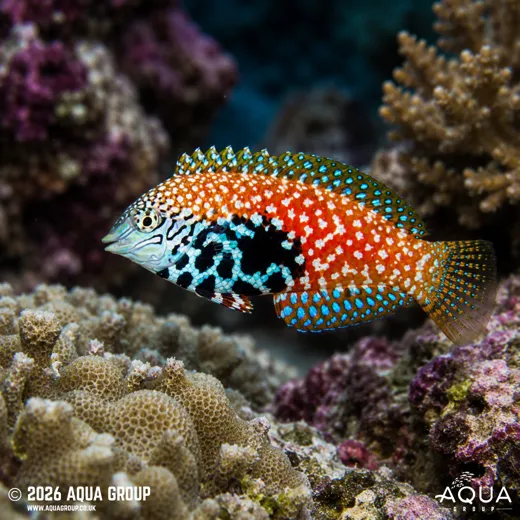
Peacock Wrasse (Macropharyngodon bipartitus)
The Peacock Wrasse, Macropharyngodon bipartitus, is a stunning and highly sought-after marine leopard wrasse, admired for its intricate patterning, elegant swimming behaviour and vibrant colour variation between males and females. Also known as the Blue Star Leopard Wrasse, Vermiculate Leopard Wrasse or Splendid Leopard Wrasse, this species can be a beautiful addition to a mature reef aquarium. However, it is a specialist wrasse that requires stable water quality, a soft sand bed, peaceful tank mates and regular access to natural microfauna, making it best suited to experienced marine fishkeepers.
Key Features
- Vibrant colouration with males displaying bright blue and yellow patterns
- Elegant swimming behaviour and active feeding habits
- Sexual dimorphism: males are more brightly coloured than females
- Requires stable water parameters and a well-established reef environment
Specifications
| Species | Macropharyngodon bipartitus |
|---|---|
| Common Names | Peacock Wrasse, Blue Star Leopard Wrasse, Vermiculate Leopard Wrasse, Splendid Leopard Wrasse |
| Size (adult) | 6 to 8 inches |
| Water Temperature | 75–82°F (24–28°C) |
| Water pH | 8.1–8.4 |
| Water Hardness | 8–12 dGH |
| Compatibility | Peaceful tank mates; avoid aggressive or large fish |
FAQ
What is the typical size of a Peacock Wrasse when fully grown?
A Peacock Wrasse typically reaches a size of 6 to 8 inches when fully grown.
What kind of tank conditions does the Peacock Wrasse require?
The Peacock Wrasse requires stable water quality, a soft sand bed, and a mature reef environment with access to natural microfauna. It thrives in water temperatures between 75–82°F (24–28°C), pH levels of 8.1–8.4, and water hardness of 8–12 dGH.
Are there differences in appearance between male and female Peacock Wrasse?
Yes, males display more vibrant blue and yellow patterns, while females are generally more subdued in colouration.

Leah Underwood –
The Peacock Wrasse adds a striking visual element to my reef tank. The male’s bright blue and yellow markings are truly eye-catching. I’ve maintained stable water parameters and provide a soft sand bed. It’s active and peaceful, and has adapted well after a few months. Only recommend for experienced marine aquarists.
Neil Harris –
Beautiful fish with elegant movements. I noticed the colouration changes slightly over time, especially in the male. The tank needs to be mature and stable, which I’ve ensured. It’s not for beginners, but once set up properly, it’s a rewarding addition.
Maria Hunter –
I’ve had this wrasse for over six months. It’s very active and helps maintain the reef by cleaning small algae. The colouration is vivid, and it coexists well with other peaceful species. I keep a soft sand bed and provide regular microfauna access.