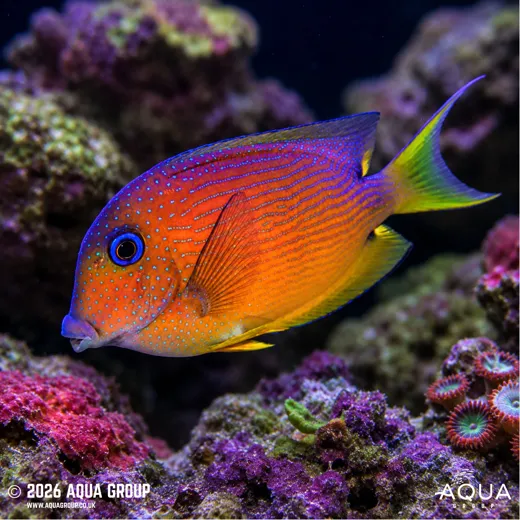
Blue Eye Kole Tang (Ctenochaetus binotatus)
The Blue Eye Kole Tang (Ctenochaetus binotatus) is an attractive bristletooth surgeonfish recognised by its vivid blue-ringed eyes, finely lined brown body, spotted head and two dark markings near the rear of the dorsal and anal fins. Also known as the Two Spot Bristletooth Tang or Twospot Surgeonfish, it originates from coral and rubble reefs across the tropical Indo-Pacific. This active grazer is valued for continuously browsing detritus and fine algal films from mature rockwork, making it an appealing and useful addition to a spacious, established reef aquarium.
Key Features
- Vivid blue-ringed eyes
- Finely lined brown body with spotted head
- Two dark markings near the rear of dorsal and anal fins
- Active grazer that feeds on detritus and fine algal films
- Native to tropical Indo-Pacific coral and rubble reefs
| Species | Ctenochaetus binotatus |
|---|---|
| Common Names | Blue Eye Kole Tang, Blue-Eyed Bristletooth Tang, Two Spot Bristletooth Tang |
| Habitat | Tropical Indo-Pacific coral and rubble reefs |
| Behavior | Active grazer; browses detritus and fine algae from mature rockwork |
FAQ
What is the typical size of a Blue Eye Kole Tang in an aquarium?
The Blue Eye Kole Tang typically grows to about 10 to 12 inches in length in a well-maintained aquarium environment.
Is the Blue Eye Kole Tang suitable for a beginner reef tank?
No, this species is best suited for experienced reef aquarists due to its active nature and need for a spacious, mature reef setup.
What kind of diet does the Blue Eye Kole Tang require?
It primarily feeds on detritus and fine algal films. A diet of algae wafers, spirulina, and other algae-based foods is recommended to maintain health.

Nicola Terry –
The Blue Eye Kole Tang is a striking addition to my reef tank. Its bright blue eyes stand out beautifully against the reef backdrop. It’s active and helps keep the rockwork clean by grazing on algae. I’ve had it for six months and it’s thriving in a 120-gallon tank with mature coral.
Edward Walsh –
This fish is visually impressive and quite active. I noticed it spends most of its time near the lower rockwork where it grazes on algae. It’s not a small fish and needs plenty of space. I recommend only for experienced reef keepers with a well-established tank.
Michael Ball –
The two dark spots on its fins are very distinctive. It’s calm during the day and becomes more active at dusk. I appreciate how it helps maintain algae levels without causing disturbances to other tank inhabitants.