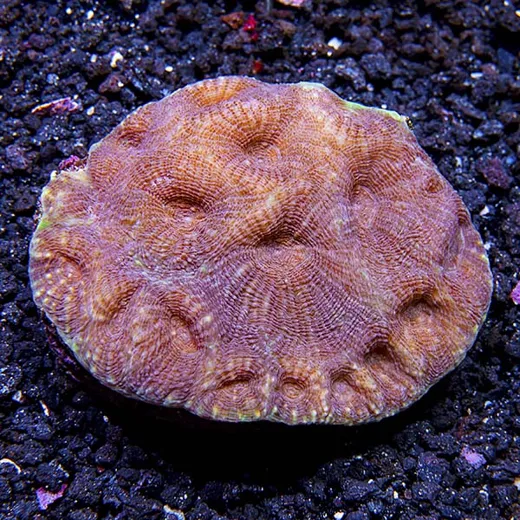
Acan Brain Coral by LiveAquaria
The Acan Brain Coral brings vibrant energy to any reef aquarium with striking orange, red, and teal coloration. This color morph of the large polyp stony (LPS) coral, Acanthastrea echinata, showcases vivid gradients inspired by pop-culture aesthetics. Its intense coloration adds visual excitement to dull or barren areas of the tank, enhancing the overall appeal of the reef environment.
Acanthastrea species typically feature large corallites measuring 8–15mm, with small teeth or lobes on the septa and well-developed columellae. In natural habitats, they are commonly found in shallow waters up to 20 meters, often in protected lagoon areas.
| Key Features | Details |
|---|---|
| Species | Acanthastrea echinata |
| Corallite Size | 8–15mm |
| Coloration | Teal, orange, red gradients |
| Habitat | Shallow reef zones, up to 20m |
| Best Growth Conditions | Stable water parameters, moderate to high lighting |
FAQ
What makes the Acan Brain Coral different from other Acanthastrea species?
The Acan Brain Coral features unique coloration gradients of teal, orange, and red, inspired by pop-culture aesthetics, which distinguishes it from standard color morphs of Acanthastrea echinata.
What lighting conditions are ideal for this coral?
This coral thrives under moderate to high lighting conditions, which enhance its vivid coloration and promote healthy growth.
Is the Acan Brain Coral suitable for beginners?
Please contact customer service for information on suitability for beginner reef keepers.

Jennifer Morgan –
The Acan Brain Coral transformed my tank’s look instantly. The orange and teal gradients stand out beautifully and add a dynamic energy to the reef. It’s grown well in my 120-liter tank with proper lighting and stable water parameters.
David McGrath –
I was initially skeptical about color morph corals, but this one exceeded expectations. The color changes are vibrant and consistent. It’s a great addition to a balanced reef setup.
Jacob Walker –
After adding the Acan Brain Coral, my tank feels much more lively. The coral has grown steadily over three months and maintains its bright colors even during water changes.