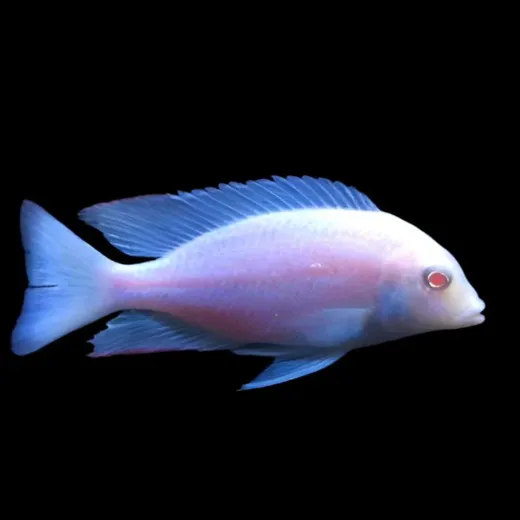
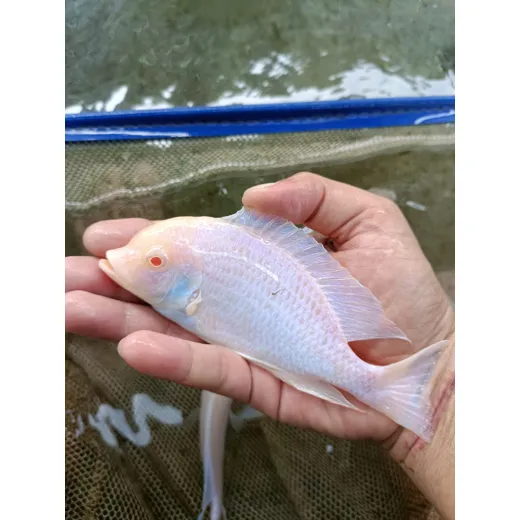
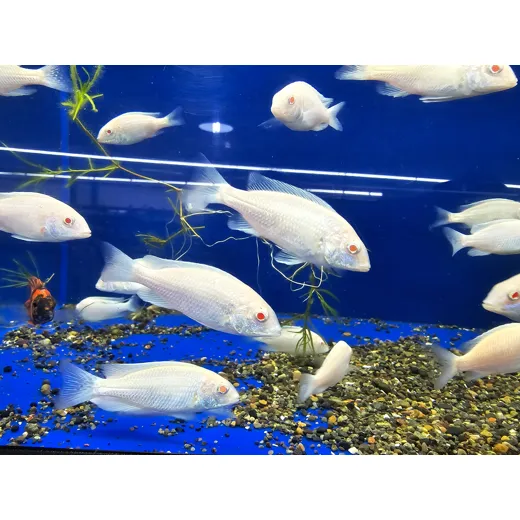
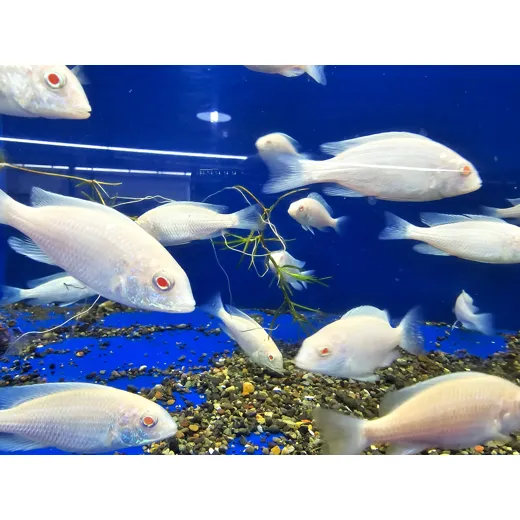
Malawi Albino Dolphin Cichlid (Cyrtocara Moori)
The Malawi Albino Dolphin Cichlid is a variant of the popular Blue Dolphin Cichlid. As they mature, they develop a noticeably large hump on the head. The Dolphin Cichlid gained its name because of its large round forehead and pointy lips, which gives it the appearance of a real dolphin.
This cichlid is very aggressive and should be added with caution into the aquarium. Only other fish with similar temperament should be housed with the Albino Dolphin. The Albino Dolphin will feed on food that falls into the substrate, so it’s very important to provide them with a nice open space and a sandy substrate.
Maximum size: 8 inches
| Feature | Detail |
|---|---|
| Species | Cyrtocara Moori |
| Color Variant | Albino |
| Temperament | Aggressive |
| Substrate Preference | Sandy |
| Adult Size | 8 inches |
FAQ
What is the maximum size of the Malawi Albino Dolphin Cichlid?
The maximum size is 8 inches.
What kind of substrate does the Albino Dolphin prefer?
It prefers a sandy substrate.
Can the Albino Dolphin be kept with other fish?
Only with other fish that have a similar aggressive temperament.
Amanda Dyer –
This fish is striking in appearance with its white color and unique hump. It’s very active and needs plenty of space. I made sure to use a sandy bottom and keep it in a large tank with other aggressive cichlids. It’s not for beginners, but once you get the setup right, it’s a fascinating addition.
Alison Mills –
The Albino Dolphin looks beautiful and has a very distinct look. I noticed it spends a lot of time near the bottom, so I adjusted the feeding to drop food into the substrate. It’s aggressive, so I didn’t mix it with peaceful species. Overall, a great choice for experienced aquarists.
Karen Ince –
It’s a visually impressive fish, but I found it to be quite territorial. I had to carefully select tank mates and ensure the tank was large enough. Feeding is straightforward, but it does require a lot of attention to tank setup and compatibility.