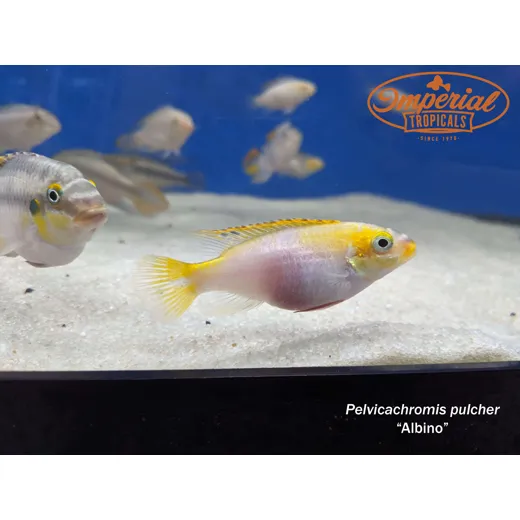
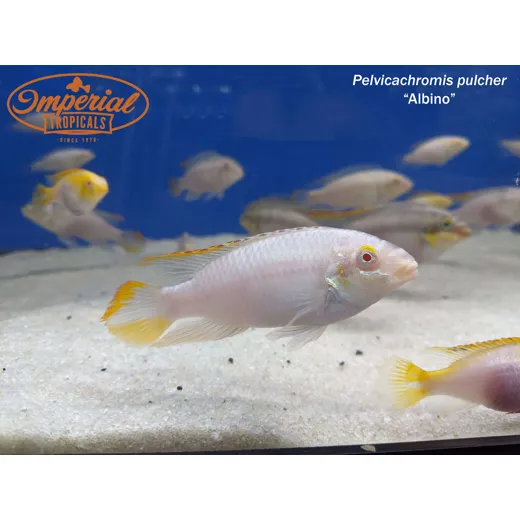
Albino Kribensis (Pelvicachromis pulcher)
Common kribensis (Pelvicachromis pulcher) have been a staple in the aquarium hobby for decades. Both males and females show brilliant colors, long fins, and excellent parental care. Sand is necessary, as these cichlids spend a considerable amount of time digging in the substrate for food and rearranging their habitat.
When a pair forms, they will often remain a pair for life. After choosing a spot to spawn, usually inside a cave with a narrow opening, the pair will dig out a pit to make their spawning area larger and cleaner. Spawning typically takes place at night, and after several days, you will see fairly large free-swimming fry emerge from the opening, guarded closely by the pair. Each day, the pair will allow the fry to explore the tank and interact with the environment.
| Specifications |
|---|
| Species: Albino Kribensis (Pelvicachromis pulcher) |
| Size: Up to 3 inches (7.5 cm) |
| Lifespan: 8–12 years |
| Water Temperature: 75–82°F (24–28°C) |
| Water pH: 6.0–7.5 |
| Substrate Preference: Sand |
FAQ
What is the typical behavior of albino kribensis in a tank?
Albino kribensis are known for forming long-term pairs and displaying strong parental care. They dig in the substrate to create spawning areas and guard their fry. They are active during the night and prefer a sandy substrate for digging and foraging.
Do albino kribensis require specific tank conditions?
Yes, they thrive in a well-maintained aquarium with a sandy substrate, stable water temperature between 75–82°F, and a pH range of 6.0–7.5. They are sensitive to sudden changes in water chemistry.
Can albino kribensis live with other fish species?
They are generally peaceful and can coexist with other community fish, but they may become territorial when paired. Avoid keeping them with very aggressive or fast-swimming species.


Joanne Arnold –
The albino kribensis are very active and colorful. They form a strong pair and are great parents. I noticed they dig in the sand daily, which is a nice behavior. The tank looks more natural with them around. Easy to care for as long as the water parameters are stable.
Luke Burgess –
These fish are beautiful and show great parental instincts. I’ve had them for six months and they’ve successfully raised fry. They prefer sand, so I switched from gravel and now it’s much better. They’re not aggressive and fit well in a community tank.
Owen Morrison –
The albino coloration is striking and they are very interactive. They dig constantly and create nice burrows. I love watching them spawn and care for the fry. The only thing is they need a sandy bottom and consistent water conditions.