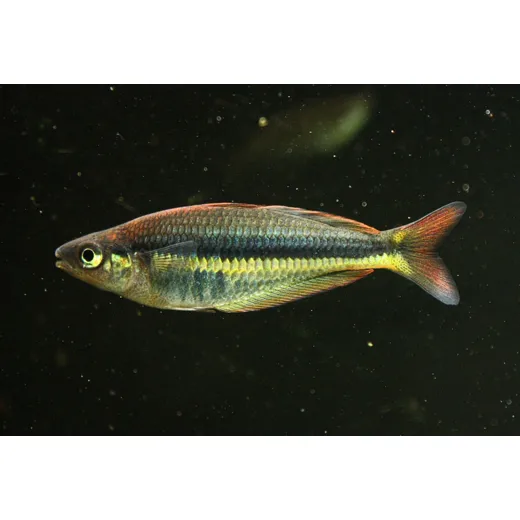
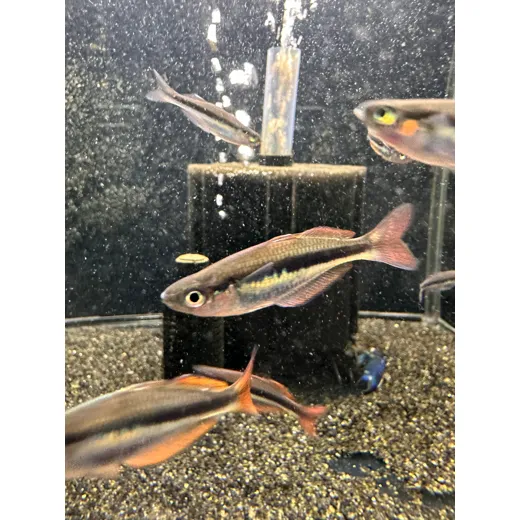
Chilatherina alleni “Wapoga” Red Form
This marvelous rainbowfish was found in the same river as Melanotaenia rubravittata and was collected by Gary Lange, Johannes Graf and Dan Dority in Siewa, PNG during their Wapoga expedition. This species was actually named after “Godfather of Rainbowfish” Ichthyologist Dr. Gerald Allen, thanks to the efforts of Gary Lange and David Price.
Allen’s Wapoga Rainbowfish is a bright yellow torpedo on caffeine, with a blue-black horizontal side stripe and a red nuptial band that flashes as the males zip past one another to catch the attention of their lady friends. Another undemanding species, these fish will accept a wide variety of foods but will show their best colors with high quality dry, frozen or live foods. This is a medium sized species, maxing out around 4 – 4.5 inches in captivity.
| Specifications |
|---|
| Species: Chilatherina alleni “Wapoga” Red Form |
| Size: 4 – 4.5 inches (max) |
| Origin: Siewa, Papua New Guinea |
| Coloration: Bright yellow body, blue-black horizontal stripe, red nuptial band |
| Feeding: Accepts dry, frozen, or live foods; best colors with high-quality foods |
FAQ
What is the origin of this rainbowfish species?
This species was collected in Siewa, Papua New Guinea, by Gary Lange, Johannes Graf, and Dan Dority during the Wapoga expedition.
How big does the Wapoga Rainbowfish grow in captivity?
The maximum size reached in captivity is 4 to 4.5 inches.
What kind of food does this fish prefer?
It accepts a variety of foods but shows its best colors with high-quality dry, frozen, or live foods.

Jason Wright –
The fish are very active and show vibrant colors, especially during the day. The red nuptial band flashes beautifully when they swim together. Easy to care for and adapt well to a community tank with proper diet.
Megan Duncan –
Great addition to a tropical aquarium. The blue-black stripe and red band are striking. Feeds well on frozen brine shrimp and flakes. Needs a bit of space to swim freely.
Ryan MacDonald –
I’ve had these for three months and they remain lively and colorful. They don’t stress easily and get along well with other peaceful fish. The red band is especially noticeable when they move quickly.