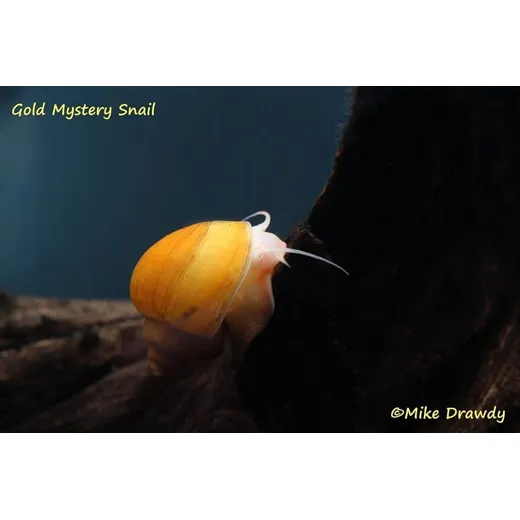
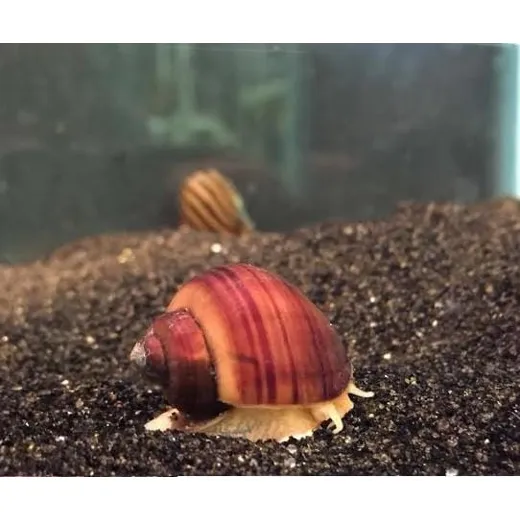
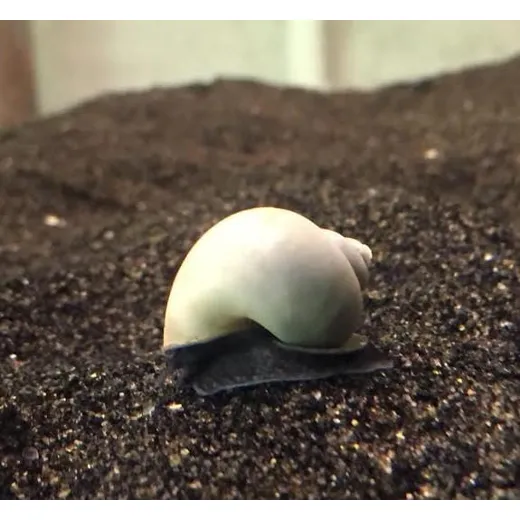
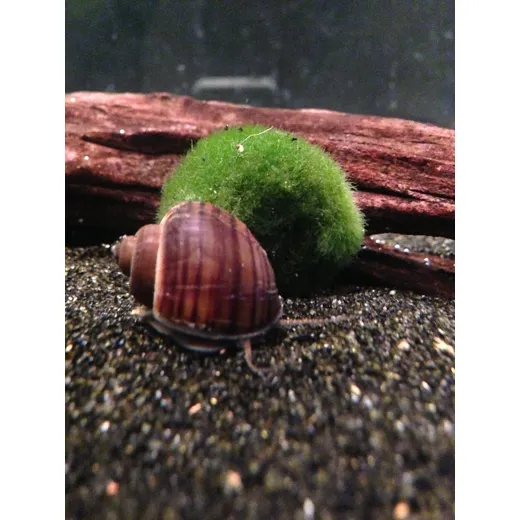
B-Grade Mystery Snail (Pomacea bridgesii)
Mystery snails (Pomacea bridgesii) are a popular choice in the aquarium hobby for their effective algae control and ease of care. These snails are known for their ability to thrive in a variety of tank conditions and are easy to breed.
Unlike many other snail species, mystery snails are sexually distinct—males have a second appendage beside their siphon, which helps them absorb oxygen from the water surface. This adaptation supports their survival in environments with lower oxygen levels.
They lay eggs just above the water surface, typically on the glass of the aquarium, forming large clusters that resemble pink styrofoam. These egg masses can be removed manually to prevent overpopulation.
Since mystery snails lack a larval stage, the young hatch as fully formed miniature adults and immediately begin feeding on algae.
Specifications
| Species | Pomacea bridgesii |
|---|---|
| Sexual Dimorphism | Males have a second appendage beside the siphon |
| Reproduction | Lays eggs on glass; no larval stage |
| Development | Hatches as adult-sized snails |
FAQ
Do mystery snails require special water conditions to survive?
No, mystery snails thrive in standard aquarium conditions and do not require special water parameters.
How can I prevent overpopulation of mystery snails?
Remove egg clusters before they hatch to control population growth.
Are mystery snails easy to breed in home aquariums?
Yes, mystery snails are very easy to breed and reproduce naturally in suitable environments.


Bella Hemmings –
These snails have been great for keeping algae under control in my 55-gallon tank. I noticed the egg clusters on the glass, so I started removing them weekly. The snails are active and clean the glass and plants well. No issues with water quality or behavior.
Robert Henderson –
I bought a small group and they’ve been thriving. The males are clearly distinguishable by the extra appendage. I found the egg clusters on the glass and removed them to avoid too many snails. They’re a reliable algae eater.
Max Roberts –
Great addition to my aquarium. They don’t eat fish or plants and only target algae. The hatching process is straightforward—no larvae, just tiny adults. Easy to manage with regular egg removal.