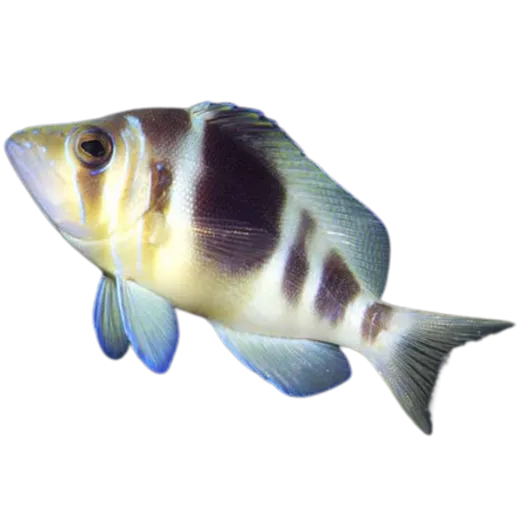
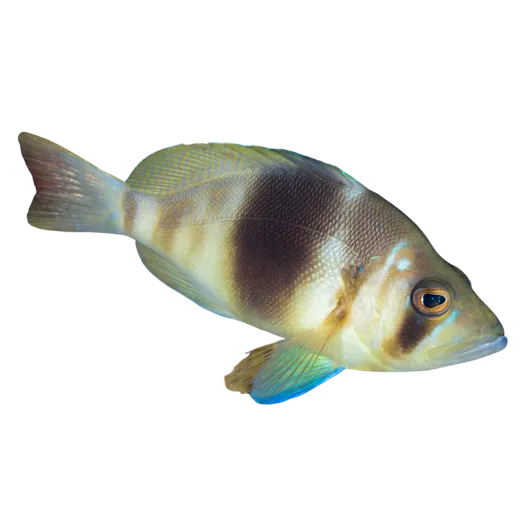
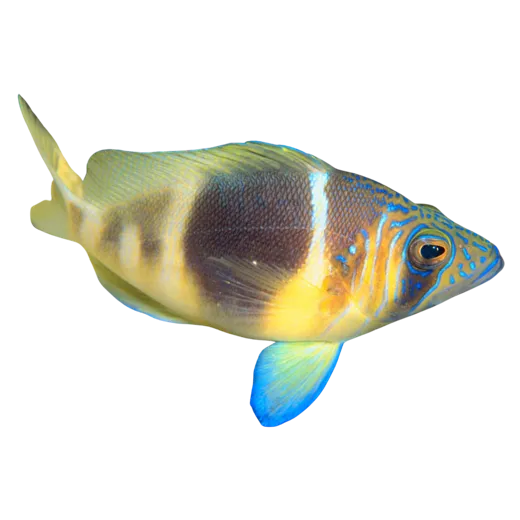
Barred Hamlet (Hypoplectrus puella)
The Caribbean Barred Hamlet (Hypoplectrus puella) is a striking and personality-filled addition to saltwater aquariums. Known for its pale body accented by bold vertical black bars, this small grouper relative adds dramatic contrast and a classic Caribbean reef look to your tank.
Native to Caribbean reefs and rocky outcrops, Barred Hamlets appreciate plenty of live rock with caves and overhangs where they can perch and feel secure. They are generally peaceful toward similarly sized fish but can be territorial with their own kind or very small tank mates.
This species is hardy and adapts well to captivity, readily accepting a carnivorous diet of meaty frozen foods such as mysis shrimp, brine shrimp, and finely chopped seafood, along with high-quality marine pellets.
| Specifications |
|---|
| Scientific Name: Hypoplectrus puella |
| Size: Up to 6 inches |
| Temperature: 75–82°F |
| Water pH: 8.1–8.4 |
| Compatibility: Peaceful with larger, non-aggressive fish; avoid small or similar species |
| Diet: Carnivorous; frozen foods, marine pellets |
FAQ
What kind of habitat does a Barred Hamlet need in an aquarium?
Barred Hamlets require plenty of live rock with caves and overhangs where they can perch and feel secure. They thrive in a well-structured reef tank with ample hiding spots.
Is the Barred Hamlet aggressive toward other fish?
They are generally peaceful with similarly sized fish but can become territorial with their own kind or very small tank mates.
What do Barred Hamlets eat?
They accept a carnivorous diet of meaty frozen foods such as mysis shrimp, brine shrimp, and finely chopped seafood, as well as high-quality marine pellets.

Oliver MacLeod –
The Barred Hamlet is a beautiful addition to my reef tank. It’s active and curious, and the black bars stand out beautifully against the pale body. I provide plenty of live rock and it uses the caves well. Feeds easily on frozen mysis and brine shrimp.
Robert Sharp –
It’s a striking fish with a classic look. I noticed it’s a bit territorial with two other small fish, so I adjusted the tank layout to give it more space. Overall, it’s a great choice for a reef setup with proper hiding places.
Alexandra Abraham –
Easy to care for and very active. I’ve been keeping it for six months and it’s still healthy and vibrant. The diet is simple—just a mix of frozen foods and marine pellets. It’s a real eye-catcher in the tank.