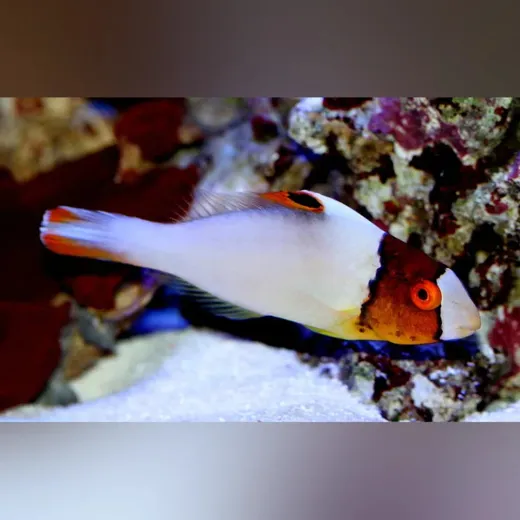
Bicolor Parrotfish
The Bicolor Parrotfish features dramatic color transformations. Juvenile individuals have a striking white body with a broad orange band across the face and a prominent black eyespot on the dorsal fin. As it matures, it transitions into the terminal phase male, developing a beautiful green to blue-green body with pink spots and markings.
| Size | 20 to 35 inches (50–90 cm) in the wild |
|---|---|
| Adult Tank Requirement | 500+ gallons (commercial or public aquarium-sized systems) |
| Common Names | Two-color Parrotfish, Bumph |
FAQ
What is the color change pattern of the Bicolor Parrotfish?
Juveniles have a white body with an orange band across the face and a black eyespot on the dorsal fin. As it matures, it becomes green to blue-green with pink spots and markings.
Is this fish suitable for a home aquarium?
No, the Bicolor Parrotfish is not suitable for most home aquariums due to its large adult size. It requires a system of 500+ gallons and is only appropriate for expert aquarists with commercial or public aquarium setups.
What are the common names for this species?
The Bicolor Parrotfish is also known as the Two-color Parrotfish and Bumph.

Charles Wilson –
This fish is a stunning sight in a large public aquarium. The color change from juvenile to adult is remarkable. I’ve seen it transition from white with orange markings to vibrant green with pink spots. It’s a true showpiece, but only for very large tanks. Not for beginners or small setups.
Jacob Lee –
The Bicolor Parrotfish is impressive in appearance. The juvenile stage is very striking with the orange band and black eyespot. After a few months, it changes to a beautiful green color. It’s a great addition to a large, well-maintained aquarium, though it requires a lot of space and care.
Benjamin Ball –
I have a 500-gallon tank and this fish fits well. The color change is dramatic and the fish is active. However, it’s not a low-maintenance species. Feeding and water quality need to be closely monitored. Only recommended for experienced aquarists with large systems.