Birdmouth Wrasse
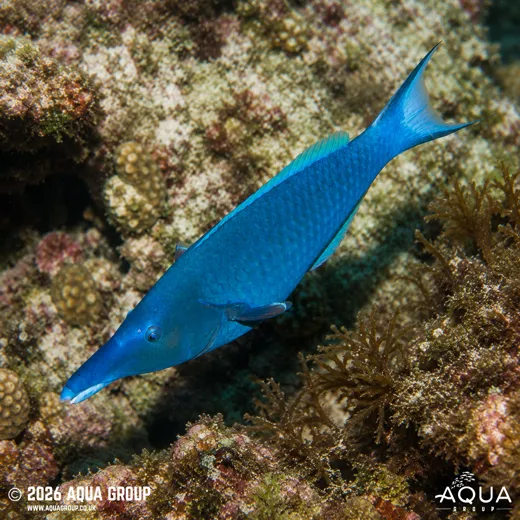
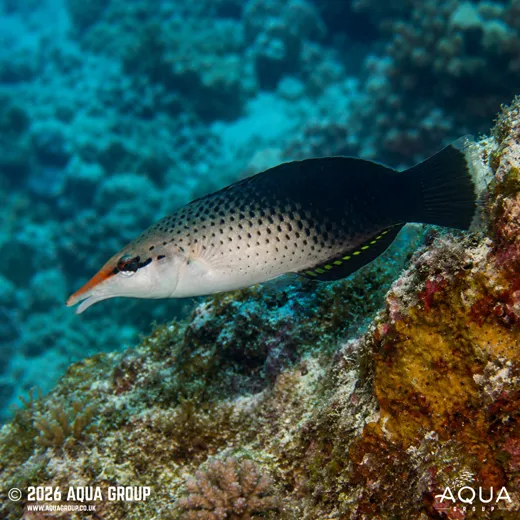
An unmistakable wrasse with a long, curved beak-like snout used to extract prey from crevices. Males mature into a brilliant blue-green.
Feeding
Carnivorous. Frozen mysis, chopped prawn, clam and marine pellets, two or three times daily.
Compatibility
Reef safe with corals but a highly effective hunter of ornamental shrimp, crabs and small snails. Boisterous with smaller tankmates.
Behaviour and personality
Swims constantly and rapidly using the pectoral fins, probing crevices with the long beak. Males are brilliant blue-green; females brown and white.
Before you buy
| Key Points |
|---|
| Grows to 25 cm or more |
| Swims constantly |
| Needs a large tank with open space |
| A determined jumper, so the tank must be sealed |
| Will clear a reef of ornamental shrimp |
FAQ
What is the feeding behavior of the Birdmouth Wrasse?
The Birdmouth Wrasse is carnivorous and should be fed frozen mysis, chopped prawn, clam, and marine pellets two to three times daily.
Is the Birdmouth Wrasse safe for a reef tank?
Yes, it is reef safe with corals, but it is a strong hunter of ornamental shrimp, crabs, and small snails.
How does the color of the Birdmouth Wrasse vary by sex?
Males mature into a brilliant blue-green, while females are brown and white.


Felicity Mitchell –
This wrasse is very active and constantly probes crevices. The male turned a bright blue-green after a few months. It’s a great addition to a large reef tank, though it does eat shrimp and crabs. Make sure your tank is sealed as it can jump.
Madeleine Bower –
Great for a spacious tank. The fish is curious and energetic. I noticed it clearing out small shrimp from the rockwork. Feeding it mysis and prawn chunks is easy and effective.
Nathan Grant –
It’s not for small tanks. Needs a lot of space and open areas. The male color change was impressive. I had to add more hiding spots to reduce stress on smaller invertebrates.