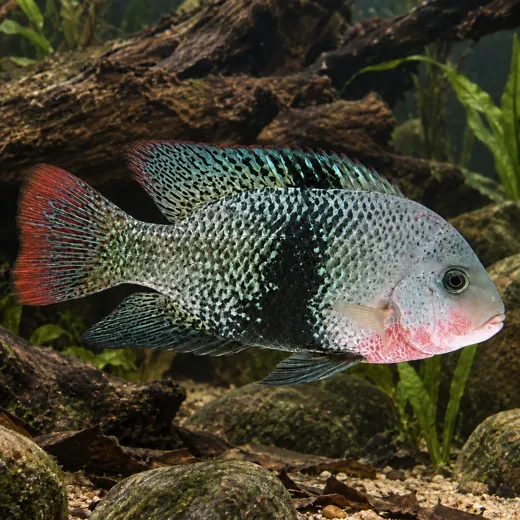
Black Belt Cichlid (Vieja maculicauda)
The Black Belt Cichlid (Vieja maculicauda) is a large, impressive Central American cichlid known for the bold black vertical band across the middle of its body that gives the species its common name. Mature specimens can develop beautiful blue-green, silver, red, and pink tones, making them a standout centerpiece fish.
These cichlids are intelligent, active, and full of personality. Like most large Vieja species, they can become territorial as they mature, especially during breeding. They are best kept with other robust Central American cichlids or similarly sized fish that can handle their aggressive tendencies.
| Key Features | Details |
|---|---|
| Species | Vieja maculicauda |
| Size (adult) | Up to 12 inches |
| Origin | Central America |
| Temperament | Aggressive when mature; territorial during breeding |
| Water Conditions | Hard, warm water; pH 6.5–7.5, temperature 75–82°F |
FAQ
What is the typical size of a mature Black Belt Cichlid?
Mature Black Belt Cichlids can grow up to 12 inches in length.
Are Black Belt Cichlids suitable for beginner aquarium keepers?
No, these cichlids are not recommended for beginners due to their aggressive nature and territorial behavior when mature.
What kind of tank mates are compatible with Black Belt Cichlids?
They are best kept with other robust Central American cichlids or similarly sized fish that can tolerate their aggression.
Sebastian Murray –
The Black Belt Cichlid is a striking fish with vibrant colors when mature. It’s active and engaging, but requires a large tank and careful tank mates. I’ve had it for six months and it’s become a focal point in my community tank.
Bernadette Black –
Beautiful fish with a strong presence. I noticed it became more territorial after six months, so I added a larger tank and a few compatible cichlids. It’s not for small setups, but it’s worth the effort.
Anthony Mitchell –
The colors develop slowly, and it took several months to see the full blue-green and pink tones. I’m cautious about keeping it with smaller fish. It’s active and needs space.