

Species Description
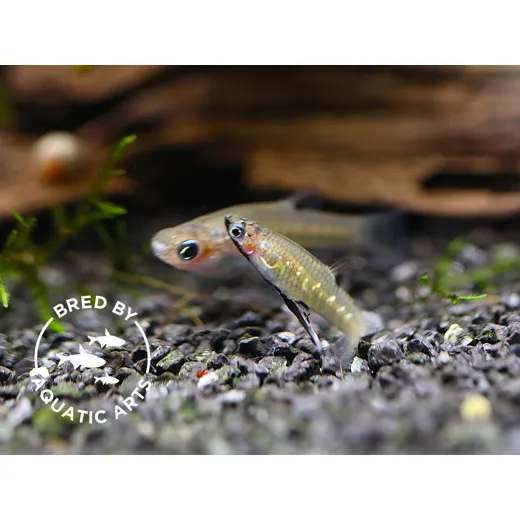
The Black Chin Livebearer (Girardinus metallicus) is one of the rarest livebearing fish available in the aquarium hobby, offering aquarists the opportunity to keep a species that is as fascinating as it is uncommon. Bred by Aquatic Arts, this beautiful Cuban native is admired for its shimmering metallic body, energetic personality, and the distinctive black chin and throat that give mature males their memorable common name. While often overshadowed by more familiar livebearers such as guppies and platies, the Black Chin Livebearer rewards aquarists with unique behaviors, peaceful social interactions, and nearly constant activity throughout the aquarium.
Unlike many ornamental livebearers that spend much of their time swimming in open water, Black Chin Livebearers are known to exhibit active schooling behavior and frequent surface movement, especially during feeding times. They thrive in well-maintained freshwater environments with moderate to high water flow and a balanced diet of high-quality flake and live foods.
| Key Features | Details |
|---|---|
| Species | Girardinus metallicus |
| Origin | Cuba |
| Gender | Males display black chin and throat; females are more subdued |
| Behavior | Active, social, peaceful |
| Water Conditions | Temperature: 72–78°F, pH: 6.5–7.5, Hardness: 3–8 dGH |
| Lifespan | 3–5 years |
FAQ
What is the difference between male and female Black Chin Livebearers?
Males develop a distinct black chin and throat as they mature, while females remain more uniformly colored and lack the prominent black marking.
How do Black Chin Livebearers behave in a community tank?
They are peaceful and enjoy swimming in groups, showing active and energetic behavior when schooling with compatible species.
What type of diet do they require?
A balanced diet of high-quality flake food, supplemented with live or frozen foods such as brine shrimp or daphnia for optimal health and color.


Liam North –
I’ve kept Black Chin Livebearers for over a year and they are incredibly active and colorful. The males are striking with their black chins, and they form a lively school. Easy to care for with regular feeding and clean water.
Caroline Ellison –
These fish are a treat to watch. They swim constantly and seem to enjoy the surface. I paired them with neon tetras and they get along well. A bit more expensive than common livebearers, but worth it for the rarity and beauty.
Mary Hamilton –
The fish arrived healthy and were very active from day one. I noticed the black chin markings clearly in mature males. They adapt well to my tank setup and are a joy to observe daily.