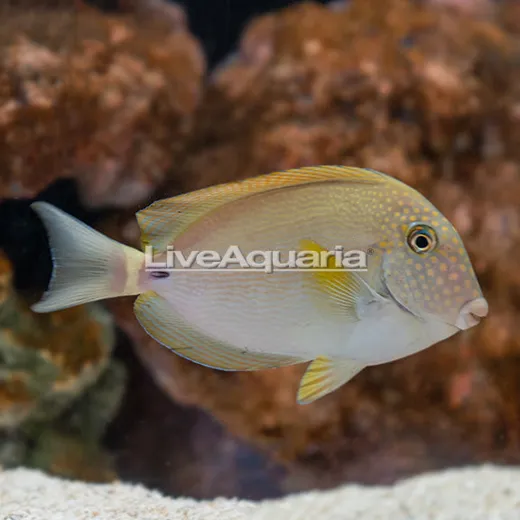
Black-Eared Tang (Acanthurus maculiceps)
The Black Eared Tang is a marine fish whose appearance becomes more striking as it matures. Juveniles have a beige body with pale yellow spots, while adults develop a smoky brown body with yellow overtones in the fins from the midline upward. A bright white vertical stripe runs along the base of the caudal fin. The most distinctive features are the brightly colored spots on the face and forehead, resembling freckles.
Generally peaceful, this species should be kept singly in a reef or fish-only aquarium, as it can become aggressive toward other tangs. Provide ample rockwork and a spacious environment—minimum 250 gallons is recommended for a healthy adult.
| Species | Acanthurus maculiceps |
|---|---|
| Adult Size | Up to 10 inches |
| Water Temperature | 75–82°F |
| Water pH | 8.1–8.4 |
| Compatibility | Best kept alone; avoid other tangs |
FAQ
What is the typical behavior of the Black-Eared Tang in an aquarium?
The Black-Eared Tang is generally peaceful but can become aggressive toward other tangs. It is recommended to keep only one per tank to avoid conflicts.
What are the ideal tank conditions for a Black-Eared Tang?
A minimum tank size of 250 gallons is required. The water temperature should be between 75–82°F, and the pH should be maintained between 8.1–8.4. Ample rockwork and swimming space are essential.
How does the appearance of the Black-Eared Tang change as it matures?
Juveniles have a beige body with pale yellow spots. As they mature, they develop a smoky brown body with yellow overtones in the fins from the midline upward. A bright white vertical stripe appears at the base of the caudal fin. The face and forehead develop bright, freckle-like spots.

Yvonne Ross –
The Black-Eared Tang has been a stunning addition to our 300-gallon reef tank. It’s calm most of the time and shows great color development after a few months. The freckle-like spots on its face are very noticeable and add a unique touch. We keep only one to avoid any aggression.
Keith Russell –
We’ve had this tang for about six months now. It’s active and beautiful, especially when the light hits the yellow fin edges. It doesn’t seem to bother other fish, and we appreciate the space it needs. A bit of rockwork helps it feel secure.
Fiona Gill –
The fish looks more vibrant as it grows. The white stripe on the tail and the facial spots are very distinct. We followed the size recommendation and have a 250-gallon tank—this was essential. No issues with aggression so far.