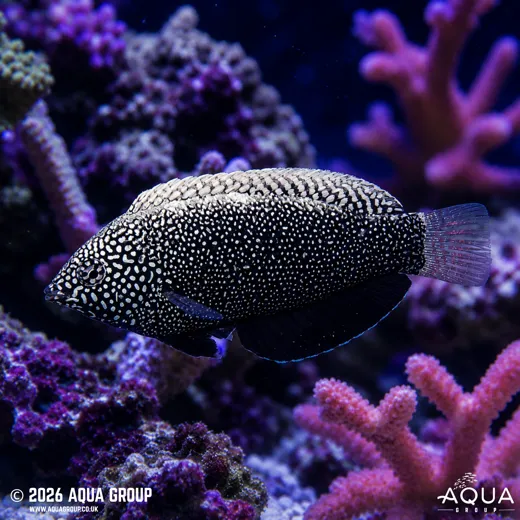
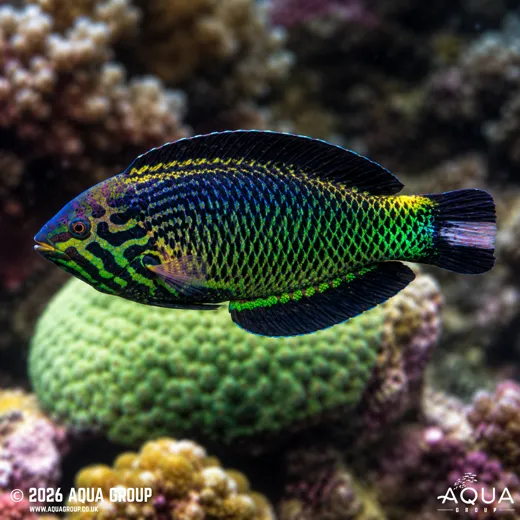
Black Leopard Wrasse
A leopard wrasse in dark green-black with fine pale spotting and a mottled pattern. Beautiful, delicate and demanding.
Feeding
Feeds on tiny invertebrates picked from rock and sand. Frozen mysis and enriched brine shrimp several times daily, plus a mature system with a live pod population.
Compatibility
Reef safe with corals but hunts small invertebrates. Peaceful and easily outcompeted.
Behaviour and personality
Picks constantly at rock and sand all day. Buries in the sand bed to sleep and when startled.
Before you buy
| Requirements | Details |
|---|---|
| Mature system | Must have a fully established reef environment |
| Sand bed | Deep, fine sand bed for burrowing |
| Feeding | Several feedings per day with frozen mysis and enriched brine shrimp |
| Live pod | Presence of a live pod population is essential |
FAQ
What kind of diet does the Black Leopard Wrasse require?
The Black Leopard Wrasse feeds on tiny invertebrates found in rock and sand. It requires frozen mysis and enriched brine shrimp fed several times a day, along with a mature reef system that supports live invertebrates.
Is the Black Leopard Wrasse safe for a reef tank?
Yes, it is reef safe with corals. However, it hunts small invertebrates and may outcompete them, so it should be introduced carefully into a mature system.
How does the Black Leopard Wrasse behave in the tank?
It is active throughout the day, constantly picking at rocks and sand. It buries itself in the sand bed to sleep and will retreat when startled.

Andrea Roberts –
The wrasse arrived healthy and has been active since setup. I had a mature tank with live rock and a deep sand bed. It feeds daily and spends time digging. Needs consistent feeding and a stable environment to thrive.
Eric Mathis –
It’s beautiful but very demanding. I didn’t have a live pod yet when I got it and it struggled at first. After adding a few live invertebrates and feeding more frequently, it started to settle in.
Sally Davidson –
A stunning addition to my reef. The dark coloration and spotting are striking. I keep it in a deep sand bed with regular feedings. It’s active and curious, and seems happy once the system is mature.