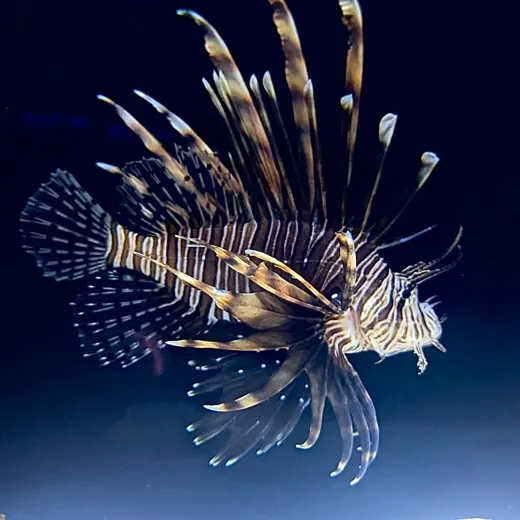
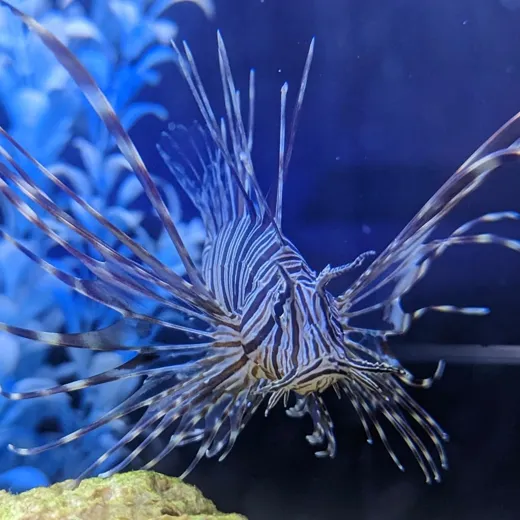
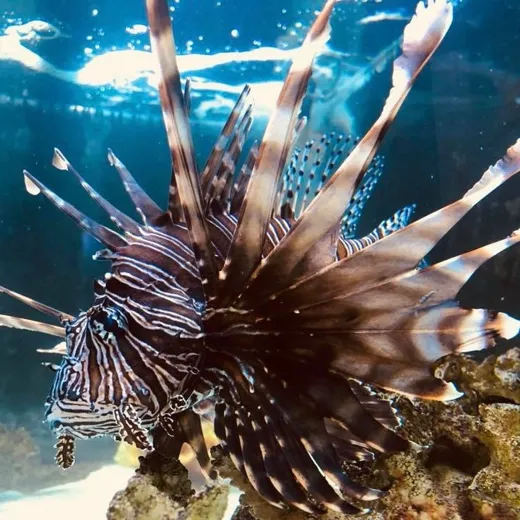
Black Volitan Lionfish (Venomous)
The Volitan Lionfish (Pterois volitans) should be housed in a 120+ gallon aquarium (when larger) with plenty of hiding places. While shy at first, they will become comfortable and be very active. The spines on the dorsal, pelvic, and anal fins are venomous and can cause a reaction similar to a very bad bee sting. These spines are used defensively. All Lionfish are safe with corals, but they will eat any fish, and most crustaceans they can fit into their mouth. Initially, Lions may require live feeder shrimp, small saltwater Mollies or other live fish. They will eventually adapt to frozen krill, small pieces of silverside and other meaty foods. Their max size is around 15″.
If stung, remove any broken spines in the wound, and immediately soak the area in warm water for 15 to 30 minutes. Seek medical attention if symptoms persist or worsen.
| Key Features |
|---|
| Species: Pterois volitans |
| Size: Up to 15 inches |
| Water Tank Requirement: 120+ gallons |
| Feeding: Live feeder shrimp, frozen krill, silverside |
| Temperament: Shy initially, active once acclimated |
FAQ
Are the spines on the lionfish venomous?
Yes, the spines on the dorsal, pelvic, and anal fins are venomous and can cause a painful reaction similar to a severe bee sting. The venom is used for defense.
Can lionfish be kept with corals?
Yes, lionfish are safe with corals. However, they will eat small fish and crustaceans that fit in their mouth.
What type of food do lionfish eat?
Initially, they require live feeder shrimp, small saltwater mollies, or other live fish. Over time, they adapt to frozen krill, small pieces of silverside, and other meaty foods.
Irene Quinn –
The lionfish arrived healthy and was active within a week. It’s shy at first but settles into the tank well. I provide frozen krill daily and it eats well. The tank is large enough and has plenty of hiding spots. I’m happy with the purchase.
Austin May –
It took a few weeks for the lionfish to become comfortable. I had to start with live shrimp, but now it eats frozen food. The venomous spines are a concern, but I keep it in a large tank with plenty of cover. Overall, a good addition to my reef setup.
Alison McLean –
The fish is vibrant and active once it feels safe. I followed the feeding guide and it has adapted well. The tank size is essential—120 gallons or more is a must. No issues with corals so far.