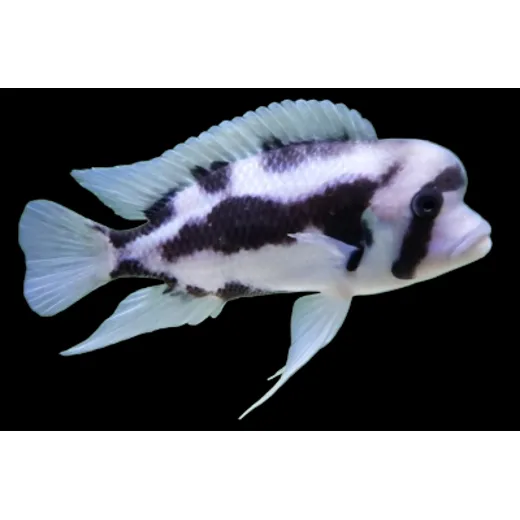
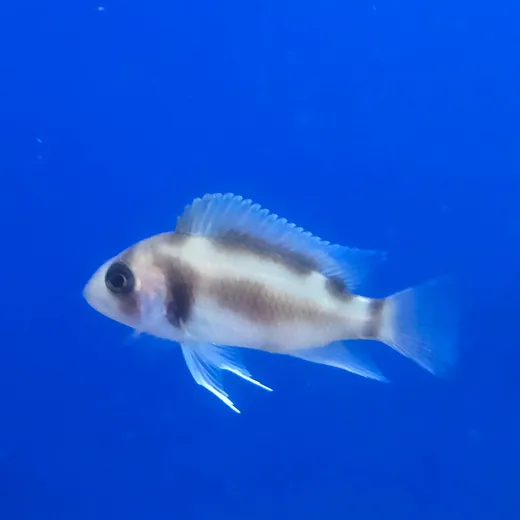
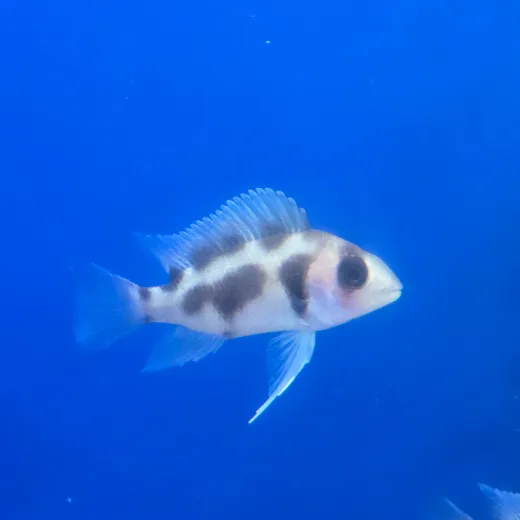
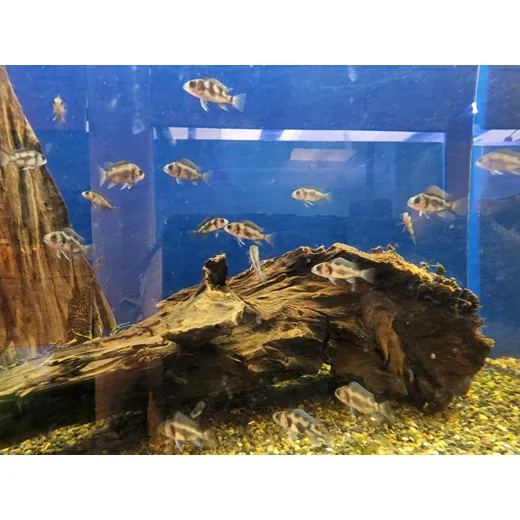
Black Widow Frontosa Cichlid
A rare and highly desirable Tanganyikan Cichlid species. Black Widow Frontosa is a rare tank-bred variation of the popular Cyphotilapia Frontosa. The Frontosa Cichlid is one of the largest Cichlid species in Lake Tanganyika, placing them at the top of the food chain in those waters. Just like its other variants, the Black Widow is a fairly calm giant. A Frontosa Cichlid is not always looking for a fight, but don’t get him wrong — it is more than capable of defending its territory and making almost any fish regret their actions. This variant is also a slow grower and develops big, offensive, sharp fangs, similar to the Burundi variant.
Good tank mates include:
- Haplochromis cichlids
- Peacock cichlids
- Synodontis species
| Size | 1.00 – 2.00 inch |
|---|---|
| Origin | Lake Tanganyika |
| Behavior | Calm, territorial |
| Growth Rate | Slow |
| Notable Features | Sharp fangs, distinctive coloration |
FAQ
What is the typical size of a Black Widow Frontosa Cichlid?
The Black Widow Frontosa Cichlid typically grows to 1.00 to 2.00 inches in length.
Is the Black Widow Frontosa aggressive?
It is generally calm but can defend its territory aggressively when necessary.
What are suitable tank mates for this fish?
Good tank mates include Haplochromis cichlids, Peacock cichlids, and Synodontis species.
Warren Gill –
Received my Black Widow Frontosa in good condition. It’s calm most of the time and doesn’t show aggression unless challenged. The sharp fangs are noticeable, but it’s not overly active. I’ve added a few Haplochromis and Synodontis, and they coexist well. A solid choice for a Tanganyikan cichlid enthusiast.
Felicity Brown –
The fish arrived healthy and has settled into the tank well. It’s not the most active, but it holds its ground when others get too close. I appreciate the slow growth — it means less stress on the tank environment. Would recommend for experienced aquarists.
David Pullman –
This is a rare and beautiful variant. The coloration stands out in the tank. It’s not aggressive by nature, but it’s clear it’s a strong fish. I’ve kept it with Peacock cichlids and they don’t seem to conflict. Great addition to a Tanganyika-focused setup.