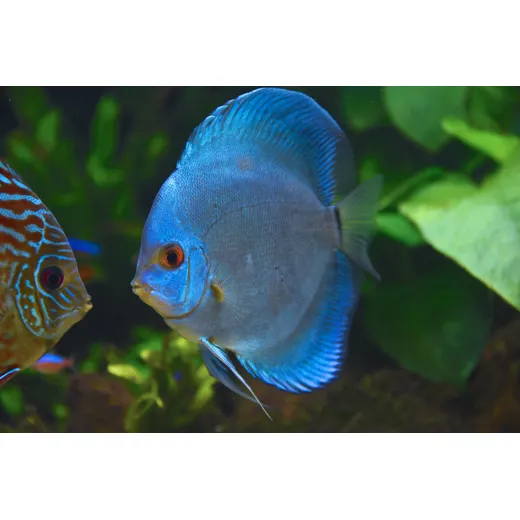
Blue Diamond Discus
Blue Diamond Discus (scientific name: Symphysodon sp.) stun everyone at first sight with its striking electric blue covering the entire disc-shaped body. The vibrant hue is the result of wild-caught specimens selectively bred based on favorable mutations in their color.
Unfortunately for beginners, Blue Diamond Discus are regarded as difficult in terms of care. Hence, they are not appropriate for the fishkeeper’s first try, despite their strong passion for the species.
Given the average large Discus size of around 5 – 7 inches, these fish normally require a fairly big aquarium tank to dwell in. They are shoaling by nature, hence keeping Blue Diamond Discus in groups (from 6 – 7 specimens) is recommended for optimal behavior and health.
| Key Features |
|---|
| Species: Symphysodon sp. |
| Color: Electric blue |
| Size: 5 – 7 inches |
| Group Size: 6 – 7 fish |
| Behavior: Shoaling, active, social |
FAQ
What is the ideal tank size for Blue Diamond Discus?
A tank of at least 50 gallons is recommended to accommodate the average size of 5–7 inches and to support their shoaling behavior.
How many Blue Diamond Discus should I keep together?
Keep at least 6 to 7 fish together to ensure social well-being and natural behavior.
Are Blue Diamond Discus suitable for beginners?
No, Blue Diamond Discus are considered difficult to care for and are not recommended for novice fishkeepers.
Nicola Randall –
I’ve kept Blue Diamond Discus for over a year now. The color is absolutely stunning and they’re very active in a well-maintained tank. I made sure to keep them in a group of seven and the tank is large enough. They do require a lot of attention to water parameters, but the visual impact is worth it.
Lillian Manning –
The fish are beautiful and have a unique blue sheen. I had to invest in a good filtration system and stable water conditions. They thrive in a group and are peaceful with other compatible species.
Ryan Robertson –
I tried keeping one at first, but it became stressed and didn’t survive. I now keep them in a group of six in a 75-gallon tank. The color is impressive, but they need consistent water quality and temperature control.