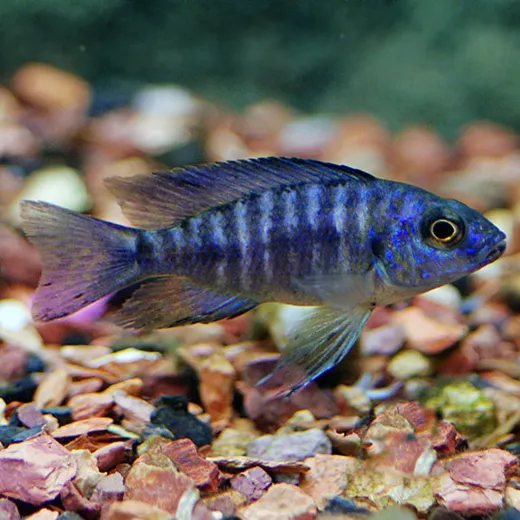
Blue Peacock Cichlid (Aulonocara nyassae)
The Blue Peacock Cichlid, Aulonocara nyassae, is native to the rocky, sandy shores of Lake Malawi, Africa. Males display a bright yellow to metallic blue coloration, while females are typically dull brown to gray.
This species thrives in a tank of at least 55 gallons with ample rock structures for territorial establishment and a sandy substrate. Males are generally only aggressive toward other males, especially if their territory is threatened. A recommended ratio is 3 to 4 females per one male.
During breeding season, the male’s colors intensify, with the yellow becoming more vivid and his behavior becoming more aggressive. To reduce stress on females, it is advised to maintain a group of multiple females with a single male.
| Species | Aulonocara nyassae |
|---|---|
| Habitat | Lake Malawi, Africa |
| Adult Size | 3 to 4 inches |
| Water Temperature | 75–82°F |
| Water pH | 7.8–8.6 |
| Aggression Level | Moderate (male to male) |
FAQ
What is the ideal tank size for a Blue Peacock Cichlid?
A tank of at least 55 gallons is recommended to provide sufficient space for territorial behavior and swimming.
Are Blue Peacock Cichlids aggressive?
Males can be aggressive toward other males, especially when their territory is invaded. Females are generally calm and peaceful.
How should I set up the tank for Blue Peacock Cichlids?
Include rocky structures for hiding and territory establishment, and use a sandy substrate to mimic their natural habitat.


Virginia MacLeod –
The Blue Peacock Cichlids are striking and active. I have one male and four females in a 75-gallon tank. The male’s colors are vibrant, especially during breeding season. The females are calm and don’t show aggression. The tank setup with rocks and sand works well for their behavior.
Gavin Nolan –
Great fish for a community tank. The male is colorful and the females are quiet. I kept them in a 55-gallon tank with plenty of rocks. They adapted well and are active without much stress.
Owen Blake –
I’ve had these cichlids for six months. The male’s blue and yellow colors are stunning, especially in the morning light. The females are peaceful and don’t fight. I follow the 3:1 female-to-male ratio, and it’s worked perfectly.