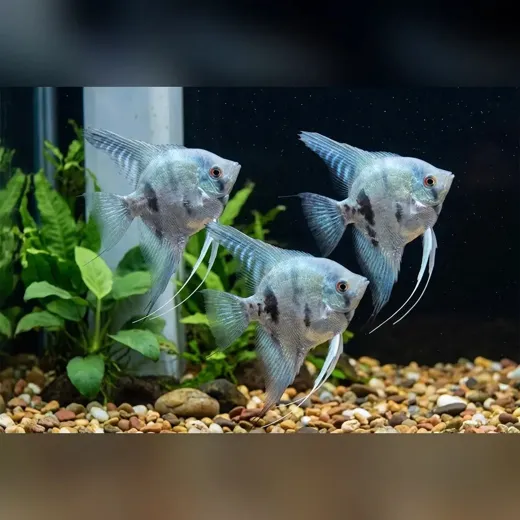
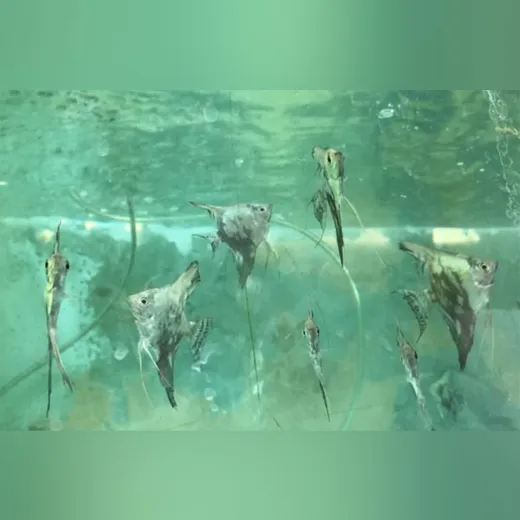
Blue Pinoy Angelfish (Group of 3)
Of course, all freshwater angelfish originated in South America, but this particular color variety was developed by fish breeder Ken Kennedy in Pinoy, Philippine Islands. Hence, this angelfish originated there and will always be considered a Filipino angel. These fish have a nice, subtle blue color gene that gets more and more dominant as the angelfish ages. This variety, to be called a Pinoy Angelfish, must be related to the original strain from Pinoy.
Please do not confuse these with lower-priced blue zebra angelfish. For reasons unknown (well, probably to help sell them), sites are calling simple blue zebra angelfish “pinoy blue zebra angelfish.” They aren’t.
Quick Facts
| Scientific Name | Pterophyllum scalare |
|---|
FAQ
What makes Blue Pinoy Angelfish different from blue zebra angelfish?
Blue Pinoy Angelfish are a distinct variety developed by Ken Kennedy in the Philippine Islands. They have a subtle blue color that intensifies with age and must be genetically related to the original Pinoy strain. Blue zebra angelfish are a different breed with striped patterns and are not the same.
How does the color of Blue Pinoy Angelfish change over time?
The blue color gene in Blue Pinoy Angelfish becomes more dominant as the fish age, resulting in a deeper and more vibrant blue hue over time.
Are these angelfish suitable for a community aquarium?
Please contact customer service


Michelle Smith –
Received three Blue Pinoy Angelfish and they are beautiful. The color is soft blue and gets richer as they grow. They seem calm and active in the tank. Definitely a unique addition to any freshwater setup.
Thomas Parsons –
The fish arrived healthy and the blue color is quite striking. I’ve read about the confusion with blue zebra types, and this one is clearly different. They are peaceful and don’t stress other fish.
Gordon Baker –
I was cautious about buying a rare breed, but these Pinoy angelfish are exactly as described. The color development over time is impressive and they thrive in a well-maintained tank.