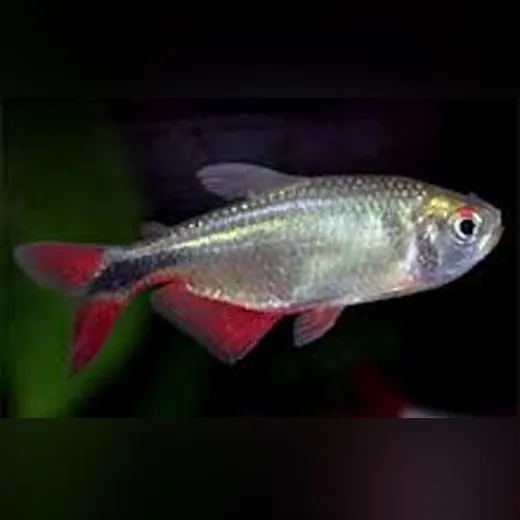
Buenos Aires Tetra – Active and Hardy Schooling Fish
For those who desire a larger schooling fish, the Buenos Aires tetra is perfect. The Buenos Aires tetra was discovered in 1907 by a collector named Carl Eigenmann, who got to name a lot of fish in those days. He found this species in Argentina, so with a little thought he came up with “Buenos Aires”. These fish do best in schools of six or more, but they do grow to three inches and are active, so they are great for midsize tanks but not for nano tanks. These tetras are hardy and eat flake food. A school of large Buenos Aires tetras can handle themselves among aggressive fish, as long as they do not fit in their mouths.
Quick Facts
| Scientific Name | Psalidodon anisitsi (formerly Hyphessobrycon anisitsi) |
|---|
FAQ
What is the ideal tank size for Buenos Aires tetras?
A midsize tank is recommended, as these fish grow up to three inches and require at least a group of six to thrive.
Can Buenos Aires tetras coexist with aggressive fish?
Yes, a school of Buenos Aires tetras can tolerate aggressive fish as long as the aggressive fish do not attempt to eat them.
What type of food do Buenos Aires tetras eat?
They are hardy and accept flake food as their primary diet.



Isaac Hart –
I kept a school of six Buenos Aires tetras in a 20-gallon tank. They’re active and colorful, and they don’t stress easily. The fish are easy to feed with flake food and stay healthy even with other fish that are a bit aggressive.
Emma King –
The tetras are lively and form a nice school. I noticed they do best when kept in groups of six or more. They don’t need much attention and are a great addition to a midsize community tank.
Andrea Marshall –
I was worried about aggressive tank mates, but the Buenos Aires tetras handled it well. They swim confidently and don’t get bullied. Great for a dynamic, active aquarium.