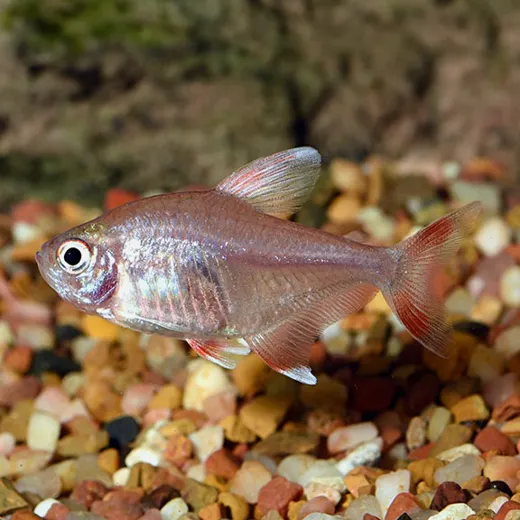
Candy Cane Tetra – LiveAquaria
The Candy Cane Tetra is a terrific addition to any freshwater community aquarium. The striking color pattern of the light pink body is accented with darker red markings in the fins and eye-catching bright white tips. The elegant nature of the Candy Cane Tetra creates an impressive display when kept in a school of six or more individuals.
The Candy Cane Tetra or HY511 Tetra is a newly discovered species of fish that has not been officially given a scientific name. The Candy Cane Tetra is a member of the Characidae Family that is often confused with the similar Rosy Tetra.
The ideal aquarium setup for the Candy Cane Tetra should include a variety of live plants, rocks and driftwood to recreate natural habitat and provide hiding spaces. Similar to other tetra species, the male Candy Cane Tetra may display more vibrant colors during breeding season.
| Specifications |
|---|
| Species: Candy Cane Tetra (HY511) |
| Family: Characidae |
| Size: Up to 1.5 inches (3.8 cm) |
| Water Temperature: 72–78°F (22–26°C) |
| Water pH: 6.0–7.5 |
| Hardness: 2–10 dGH |
| Compatibility: Peaceful community fish |
| Group Size: 6 or more |
FAQ
What is the difference between Candy Cane Tetra and Rosy Tetra?
The Candy Cane Tetra has a light pink body with darker red markings and bright white fin tips, while the Rosy Tetra has a more uniform pinkish hue with less distinct white markings. Both are members of the Characidae family and share similar care requirements.
How many Candy Cane Tetras should I keep in my aquarium?
It is recommended to keep at least six Candy Cane Tetras together to showcase their natural school behavior and maintain a balanced, lively display.
What kind of habitat do Candy Cane Tetras prefer?
They thrive in an environment with live plants, rocks, and driftwood to provide hiding spots and mimic their natural habitat.


Emily Davidson –
I added six Candy Cane Tetras to my 10-gallon tank with java fern and driftwood. They are very active and their pink and white coloration is stunning. They don’t stress other fish and stay calm in the group.
Justin Butler –
The fish arrived healthy and have been swimming in the school for two weeks. Their colors are vibrant, especially in the evening light. I noticed they hide behind plants during the day but come out at night.
Wendy Nash –
Great addition to my community tank. The contrast between the pink body and white fin tips is unique. I keep them with neon tetras and they coexist peacefully.
Jake North –
They are active and colorful, but I found they need a lot of space. My tank is 15 gallons and it’s still a bit crowded. I plan to upgrade to a larger setup.