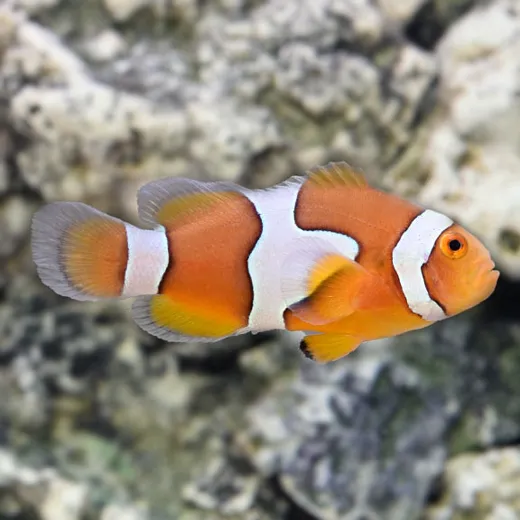
True Percula Clownfish – Captive-Bred
The Percula Clownfish, also known as the True Percula or Clown Anemonefish, is commonly found in association with anemones on reefs in Oceania, the Indo-Pacific, and the Great Barrier Reef. It typically lives individually or in pairs or small groups within the same anemone, such as Heteractis magnifica or Stichodactyla mertensii.
Captive-bred Percula Clownfish are usually orange and white when young. As they mature, the black sections between the white stripes darken. Unlike wild-caught fish, captive-bred specimens often have irregular stripes, adding to their unique appearance.
| Features | Details |
|---|---|
| Coloration | Orange and white with darkening black stripes as they age |
| Origin | Captive-bred, not wild-caught |
| Typical Habitat | Associated with anemones in reef environments |
| Group Behavior | Often found in pairs or small groups |
FAQ
What is the difference between Percula and Ocellaris clownfish?
Percula clownfish have a more uniform color pattern with distinct white stripes and darker black sections. Ocellaris clownfish typically have more defined, regular stripes and are often more commonly found in aquariums. The two species can look similar, but Percula clownfish are usually more variable in stripe pattern due to captive breeding.
Are captive-bred clownfish more suitable for home aquariums?
Yes, captive-bred Percula clownfish are generally more adaptable to home aquarium conditions than wild-caught ones. They are less stressed and more likely to thrive in a controlled environment with proper care.
Do these fish require anemones to survive?
While they naturally associate with anemones, Percula clownfish can survive in aquariums without them. However, their well-being and natural behavior are best supported when anemones are present.

Keith Avery –
The clownfish arrived healthy and active. The coloration is vibrant and the stripes are a bit irregular, which I appreciate as it makes each fish unique. I have a small anemone in the tank now and they’ve been getting along well. Easy to care for and very lively.
Wanda Tucker –
I bought this fish for my reef tank and it has adapted well. The color change over the past few weeks is subtle but noticeable. The black stripes have darkened slightly, which matches the description. I didn’t have anemones at first, but now I’ve added one and they seem to enjoy it.
Emma Baker –
Captive-bred makes a big difference. The fish looks more natural and less aggressive than wild-caught ones. It’s been two months now and still active, eating regularly, and not showing signs of stress.