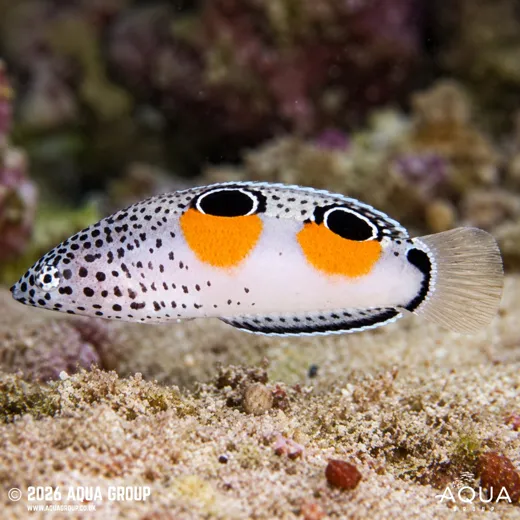
Clown Coris (Coris aygula)
The Clown Coris is a spectacular large marine wrasse that changes dramatically as it matures. Juveniles are especially eye-catching, with a pale body, orange saddles and dark false eye-spots, while adults become far darker and more robust, developing a noticeably heavier head profile. Native to the Indo-Pacific, this species is found around reef flats, lagoon reefs and seaward reefs, usually close to sand and rubble patches. Although juveniles are often sold for marine aquaria, this fish grows into a very large, powerful predator and is really only suitable for very large, mature systems run by experienced keepers.
Common Name:
Clown Coris. It is also commonly referred to as the Clown Wrasse or Twinspot Wrasse.
| Species | Coris aygula |
|---|---|
| Habitat | Indo-Pacific reef flats, lagoon reefs, seaward reefs near sand and rubble patches |
| Size (adult) | Large, growing to over 30 cm |
| Behavior | Active, predatory; juveniles are colorful and playful, adults are aggressive and territorial |
FAQ
What is the difference between juvenile and adult Clown Coris?
Juveniles have a pale body with orange saddles and dark false eye-spots. As they mature, they become darker, more robust, and develop a heavier head profile.
Is the Clown Coris suitable for a beginner marine aquarium?
No, the Clown Coris is not suitable for beginners. It grows large and becomes a powerful predator, requiring a very large, mature marine system and experienced care.
Where is the Clown Coris naturally found?
Native to the Indo-Pacific region, it is found around reef flats, lagoon reefs, and seaward reefs, typically near sand and rubble patches.
Mary Paige –
Bought the juvenile Clown Coris for my reef tank. The colors are vibrant and it’s very active. After six months, it grew significantly and became more aggressive. I now have a larger tank and more space for it. A great choice for experienced reef keepers.
Sophie Piper –
The fish arrived healthy and looked exactly as described. It’s a beautiful sight in the tank, especially when it’s active. I’m aware it grows large and needs a big system, but it’s worth it for the visual impact.
Gabrielle Manning –
I expected something more manageable, but this fish is quite large and territorial. It’s not for small tanks. I’m happy with the appearance, but I need to monitor its behavior closely.