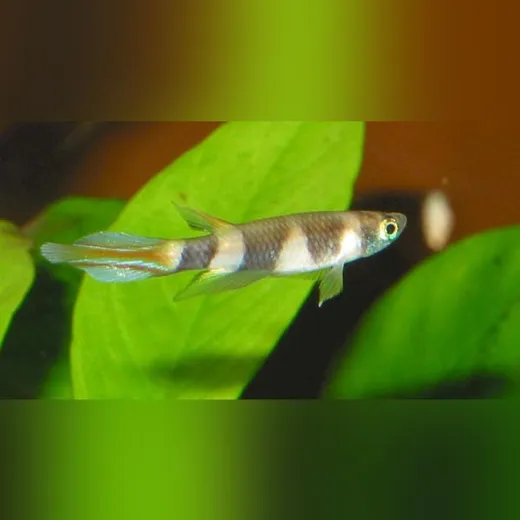
Clown Killifish
Male and female clown killifish look similar; males have a bit more color, but they are both quite small. A small group of these small fish is the best way to view them.
Quick Facts
| Scientific Name | Epiplatys annulatus |
|---|---|
| Origin | Sierra Leone, Guinea and Liberia, West Africa |
| Care Level | Moderate |
| Temperament | Peaceful |
| Adult Size | Up to 1¼” |
| Lifespan | 2–3 years |
| Diet | Carnivore (tiny meaty foods) |
| Water Temperature | 72–79°F |
FAQ
What is the typical group size recommended for clown killifish?
A small group of clown killifish is best for viewing their natural behavior and color display.
Are male and female clown killifish easily distinguishable?
Males have slightly more vibrant coloration, but the difference is subtle and both sexes look very similar.
What type of food do clown killifish prefer?
Clown killifish are carnivores and thrive on tiny meaty foods such as brine shrimp or daphnia.



Eric Kelly –
These fish are colorful and active in a small tank. I kept a group of four and they swim together nicely. Easy to care for and stay peaceful with other small fish.
Gavin Butler –
The colors are bright and they look great in a community tank. I noticed the males are slightly more vivid, but the females are still attractive. Water temperature stays stable with the heater.
Sue Hamilton –
Perfect for a beginner aquarist. They don’t require a lot of maintenance and are very peaceful. I’ve had them for over a year and they’re still healthy and active.