Clown Lab (Labidochromis chisumulae)
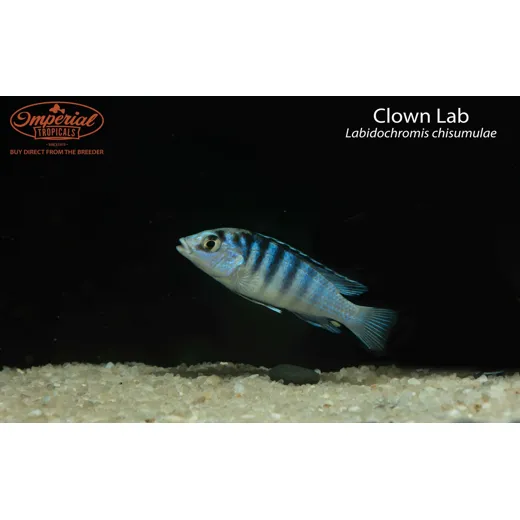
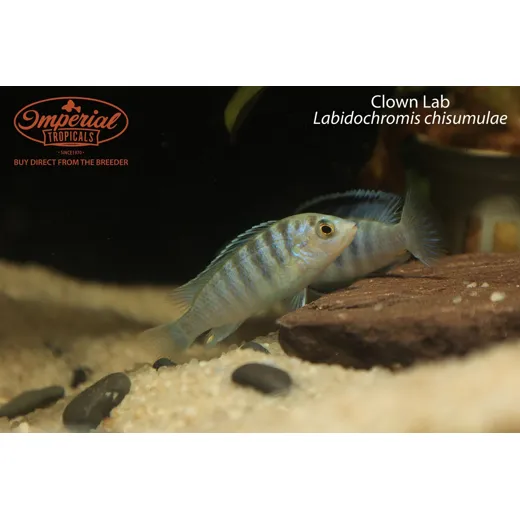
Clown labs (Labidochromis chisumulae) are a rare species closely related to the classic yellow lab (Labidochromis caeruleus), native to the rocky reefs surrounding Chizumulu Island in Lake Malawi. Juvenile and female individuals display a cream or platinum white coloration. Mature males develop a striking sky-blue body with a jet-black dorsal fin, a black mask, and vertical stripes.
The most distinguishing feature of male clown labs is a black band located just below the dorsal fin, which is absent in similar species like Labidochromis sp. ‘Chisumulae Mbweca’. This unique marking helps differentiate the two species visually.
| Species | Coloration | Sexual Dimorphism |
|---|---|---|
| Clown Lab (L. chisumulae) | Juveniles and females: cream or platinum white; males: sky-blue with black dorsal fin, mask, and vertical stripes | Males show vivid coloration; females and juveniles are pale |
FAQ
What is the key visual difference between male clown labs and male Labidochromis sp. ‘Chisumulae Mbweca’?
Male clown labs have a black band just below the dorsal fin, which is absent in male Labidochromis sp. ‘Chisumulae Mbweca’.
Where are clown labs naturally found?
Clown labs are endemic to the rocky reefs around Chizumulu Island in Lake Malawi.
Are clown labs suitable for community aquariums?
Please contact customer service




Dylan Mackenzie –
The clown labs arrived healthy and active. The males developed their bright blue coloration within a few weeks. The black band below the dorsal fin is clearly visible and very distinctive. They are peaceful and do well in a medium-sized community tank with compatible fish.
Grace Ogden –
Received the clown labs in good condition. The coloration of the males is vibrant, especially the sky-blue body and black markings. I noticed the black band below the dorsal fin as described. They seem to be adjusting well to the tank environment.
Tim White –
This is a rare and beautiful species. The juveniles are clean and active, and the males show excellent color development. The visual difference from other Labidochromis species is clear and satisfying to observe.