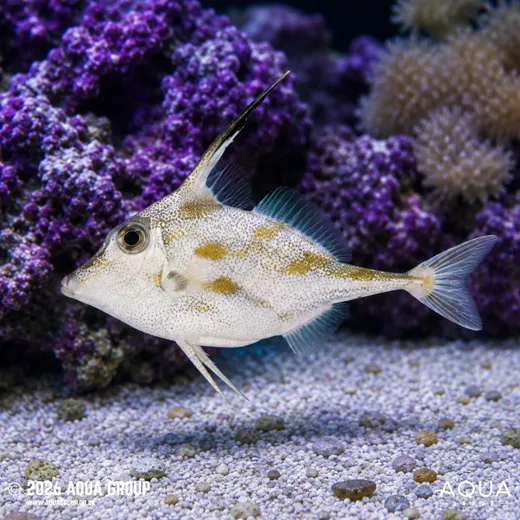
Comb Tripod Fish (Pseudotriacanthus strigilifer)
The Comb Tripod Fish (Pseudotriacanthus strigilifer) is an unusual Indo-West Pacific marine fish recognised by its laterally compressed silvery body, elongated snout, mottled brown to orange markings and prominent first dorsal spine. Also known as the Long-Spined Tripodfish or Blotched Tripodfish, it inhabits sandy and muddy coastal waters, estuaries and sheltered bays, where it searches the substrate for small benthic invertebrates. Rarely encountered in the aquarium trade, this distinctive bottom-oriented species requires a spacious, mature system with an open soft substrate and peaceful tank mates.
Key Features
| Feature | Description |
|---|---|
| Common Name | Comb Tripod Fish, Long-Spined Tripodfish, Blotched Tripodfish |
| Habitat | Sandy and muddy coastal waters, estuaries, sheltered bays |
| Body Type | Laterally compressed, silvery |
| Markings | Mottled brown to orange |
| Spine | Prominent first dorsal spine |
| Behavior | Bottom-oriented, active foraging on substrate |
FAQ
What is the ideal tank setup for the Comb Tripod Fish?
A spacious, mature marine tank with an open soft substrate is recommended. The tank should provide sheltered areas and include peaceful tank mates to ensure compatibility.
Where is the Comb Tripod Fish naturally found?
It is native to Indo-West Pacific regions, commonly found in sandy and muddy coastal waters, estuaries, and sheltered bays.
Is the Comb Tripod Fish suitable for beginner aquarium keepers?
Please contact customer service
Austin Ross –
The Comb Tripod Fish is a striking addition to my marine tank. Its unique markings and behavior stand out among other species. I’ve maintained it in a 120-liter tank with soft sand substrate and it’s been active and healthy for over six months. Only peaceful fish are kept with it, and it seems to thrive in the sheltered environment.
Lily North –
First time seeing this fish in an aquarium. It’s quite rare and looks very distinctive. I’ve provided a spacious tank with sandy bottom and it’s been exploring the substrate regularly. It doesn’t seem aggressive and appears content with the setup.
Jason Greene –
The fish arrived healthy and has been active since setup. I noticed its elongated snout and mottled pattern clearly. It spends most of its time near the bottom, foraging naturally. The tank conditions are stable and I’m pleased with how it adapts.