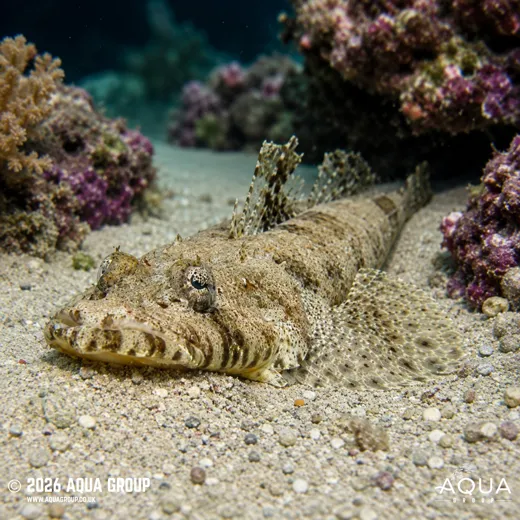
Crocodile Fish (Cymbacephalus beauforti)
The Crocodile Fish, Cymbacephalus beauforti, is an extraordinary Western Pacific ambush predator recognised by its broad flattened head, mottled camouflage and unusual fringed eye coverings. Also known as De Beaufort’s Flathead or the Crocodile Flathead, it spends much of its time lying motionless across sand, rubble or reef surfaces while waiting for passing fish and crustaceans. Its prehistoric appearance and remarkable camouflage make it a fascinating display animal, but its large adult size, predatory behaviour and specialist bottom-dwelling requirements mean it is suitable only for very spacious marine aquariums managed by experienced fishkeepers.
Key Features
| Feature | Detail |
|---|---|
| Common Name | Crocodile Fish, De Beaufort’s Flathead |
| Habitat | Western Pacific marine environments |
| Behavior | Amphibious ambush predator, bottom-dwelling |
| Size | Large adult size, varies by specimen |
| Water Requirements | Specialist marine conditions, sandy or rubble substrates |
FAQ
What are the ideal tank conditions for keeping a Crocodile Fish?
A spacious marine aquarium with a sandy or rubble substrate is required. The water conditions should mimic natural Western Pacific environments, including stable salinity, temperature, and water flow. The tank must be large enough to accommodate the fish’s size and predatory behavior.
Is the Crocodile Fish suitable for beginner aquarium keepers?
Please contact customer service
How does the Crocodile Fish behave in captivity?
It is an ambush predator that remains motionless on the substrate, waiting for prey. Its behavior mimics natural hunting patterns, and it requires a stable, well-maintained environment to thrive.
Stephanie Cornish –
This fish is a striking addition to a large marine tank. Its camouflage and unique appearance are impressive. After months of observation, it’s clear it’s a natural predator that stays still and only moves when hunting. Requires a very large tank and careful maintenance, but the visual impact is worth it.
Lucas MacDonald –
We have a 200-gallon reef tank and this crocodile fish fits perfectly. It’s not active much, which is good for the ecosystem. The mottled coloration blends well with the sandbed. Only recommend for experienced marine aquarists with proper filtration and stable water parameters.
Kevin Manning –
The fish looks amazing in the tank. It’s quiet and doesn’t disturb other species. However, it’s not a low-maintenance pet. We had to adjust water flow and substrate to keep it comfortable. Not for small tanks or beginners.